
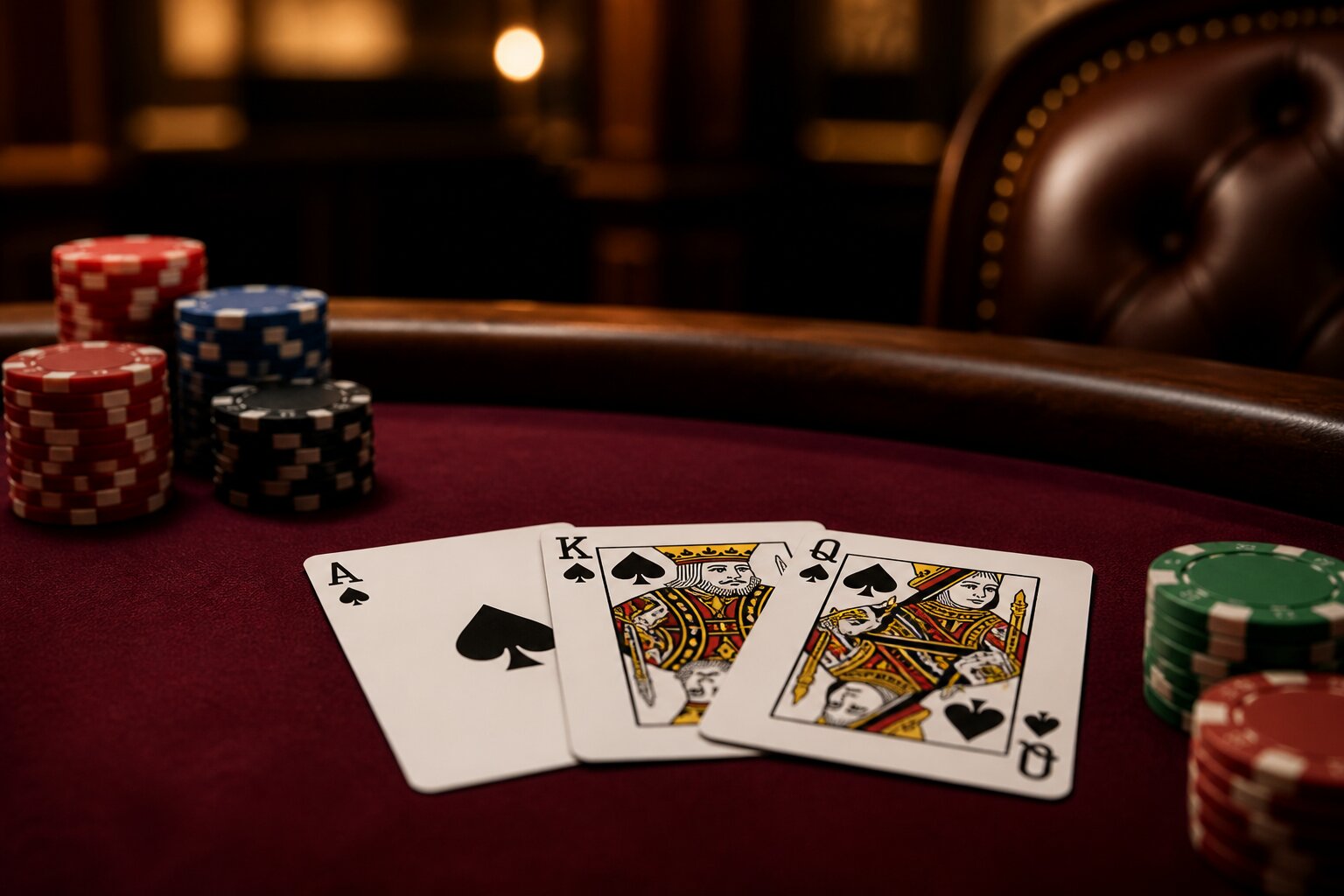
3 Card Brag is a classic British card game that’s just as enjoyable in online play as it is at the local pub. Knowing the order of the hands is the key to making confident choices and getting the most from every round.
If the ranking system feels a little confusing, this guide will take you through each hand from strongest to weakest, with clear explanations and useful examples so you’re ready the next time cards are turned over.
What Is 3 Card Brag & How Is It Played?
3 Card Brag is a fast-moving card game that has been popular in Britain for generations. Each player is dealt three cards face down. After checking their own cards, players take turns to bet, raise, or fold based on the perceived strength of their hand.
There are no community cards; everything depends on the three you hold. Rounds proceed until all bets are matched or everyone but one player folds, and then remaining players show their hands to decide the winner. The game's blend of hand-reading and betting choices gives it a strong strategic element even though the cards themselves are dealt randomly.
Keep your sessions within limits that suit you, and treat the game as entertainment rather than a way to earn money.
How Are 3 Card Brag Hands Ranked?
Hands are ranked from strongest to weakest by the specific combinations they form. The hierarchy determines who wins a showdown and is important to understand before you make any betting decisions.
At the top sits the prial. Below that come, in order of strength:
- Running flush
- Run
- Flush
- Pair
- High card
Ties are resolved by the values of the cards that make each combination. Where the primary card values are equal, secondary card values are compared to break the tie, for example by looking at the highest unmatched card or the next highest, depending on the hand type.
With that framework in mind, the next sections explain each hand in detail and show how they compare.
What Is the Best Hand in 3 Card Brag?
The strongest hand is a prial, which is three cards of the same value. Prials are very rare, so when you do hold one it is the single most powerful holding in the game.
Among prials there is a specific ranking. The order from highest to lowest is:
- Three 3s at the top
- Three Aces next
- Three Kings after that
- Then continue down through Queens, Jacks and so on to the lowest triples
If two players both have prials, the higher-valued prial wins according to that order. Because each deck contains only a limited number of each rank, two identical prials cannot occur in the same deal.
Prials are exceptional moments during play, so recognising their strength can influence how you bet and whether you choose to be bold or more cautious. Remember that their rarity means you will see them infrequently, and good play also involves managing risk when you do not hold such a hand.
What Is the Worst Hand in 3 Card Brag?
The weakest hand is the high card. This is any trio of cards that do not form one of the recognised combinations, for example:
- a pair
- a run
- a flush
- a running flush
- a prial
A high card hand is simply three unconnected cards of differing suits and ranks.
When multiple players hold high card hands, the single highest card determines the winner. If those highest cards are equal, the next highest is compared, and then the third card if needed. If all three cards match in rank across players, the hands are tied.
Receiving a high card is a normal part of play and happens frequently. Being able to compare high card hands quickly helps you decide whether to continue in a round or to fold, based on your own strategy and the state of play. Remember that folding can be the sensible option when the likelihood of improving your position is low.
Full 3 Card Brag Hands Order Explained
Understanding each hand in detail helps with both reading opponents and assessing your own chances. Below are the hands from strongest to weakest, with examples and key notes for comparison.
Prial (Three of a Kind)
A prial consists of three cards of the same value, such as three Kings. Prials are the rarest and most powerful hand in 3 Card Brag, so they beat every other hand type.
The very best prial is three 3s, followed by three Aces, then Kings, Queens, and so on down the values. Because of their rarity, encountering a prial is unusual and typically changes the strategy in a hand.
Running Flush
A running flush is three consecutive cards of the same suit, for example 4, 5, 6 of hearts. It combines the strength of a sequence with suit matching, which is why it ranks directly below prials.
Running flushes are strong but still vulnerable to a prial. When you hold one, it is often worth betting with confidence, though you should remain cautious if the game suggests an opponent may have a prial.
Run
A run is three consecutive cards in any suits, such as 7 of diamonds, 8 of clubs, and 9 of spades. Runs are beaten by running flushes and by any prial.
Because suits do not matter for a run, its relative strength depends on the ranks involved. Higher runs generally beat lower runs, so the top card of the sequence is the primary comparison point.
Flush
A flush is any three cards of the same suit that are not in sequence. For instance, 2, 7, and Jack of spades form a flush. A flush beats a pair and a high card but is outranked by runs and running flushes.
When comparing two flushes, the highest card in each flush is compared first, then the next highest, and so on, in the same way as other ranked hands.
Pair
A pair is two cards of the same value plus an unrelated third card, for example two Queens and a 5. Pairs outrank high cards but are below flushes, runs, running flushes, and prials.
If two players both hold pairs, the higher pair wins. If the pairs are the same rank, the unpaired side card (the kicker) decides the winner.
High Card
High card is any hand that does not meet the definitions above. Its value is determined by comparing the cards in descending order:
- Highest card is compared first.
- If those are equal, the second-highest card is compared.
- If still equal, the third card decides the outcome.
High card is the common baseline against which better hands are measured, and small differences in card rank can be decisive in close situations.
Each of these definitions helps when deciding how to play a hand—whether to bet on strength, slow-play, or concede the pot. Staying familiar with the order and tie-break rules improves decision-making at the table.
Do Suits Matter in 3 Card Brag?
Suits do not carry an inherent ranking in standard 3 Card Brag; clubs, diamonds, hearts and spades are treated equally. The game primarily compares hand types and the face values of cards rather than suit order.
The only times suits matter are when they are required to complete a flush or a running flush. In those cases the suit simply identifies that the three cards share the same suit.
Some variants or house rules may use suit order to break ties, so it pays to check the specific rules of the game you are joining. Examples of when suits might be used as a tie-breaker include:
- deciding between two equal-value flushes
- settling identical sequences where house rules assign a suit hierarchy
Otherwise, focus on combinations and card values rather than suit colour. Always confirm the table rules before you play so there are no surprises.
Common Myths About 3 Card Brag Hands
A few persistent myths can cloud understanding of the game. One is that certain suits or patterns give you an advantage; in standard play suits are equal and past deals do not affect future outcomes. Another is the idea that particular tables or times of play influence results; in reality each deal is independent.
A final misconception is that skill can force particular hands to appear. While skill affects betting and reading opponents, it does not change the distribution of the cards dealt. Appreciating what skill can and cannot do will make your decisions more realistic and enjoyable.
If you find disagreements about rules or tie-breakers, agree them with the group before play begins to avoid confusion.
How Do 3 Card Brag Hands Compare With Poker Hands?
There are clear differences and a few similarities between 3 Card Brag and poker. The most notable contrast is ranking order: prial is the top hand in Brag, whereas poker typically places straight flushes and four of a kind at the very top of longer-hand variants. Also, Brag’s three-card structure changes the relative probabilities of certain hands compared with five-card poker.
Runs and flushes are ranked differently across the games. In Brag, a running flush beats a plain run, and both outrank a flush. Poker often ranks a straight below a flush, so the same combination can hold a different value depending on which game you are playing.
Understanding these differences helps when switching between games, and remembering each game’s rules keeps play fair and enjoyable. Enjoy the contrasts between Brag and poker, and make choices that suit your preferred style of play.
**The information provided in this blog is intended for educational purposes and should not be construed as betting advice or a guarantee of success. Always gamble responsibly.