
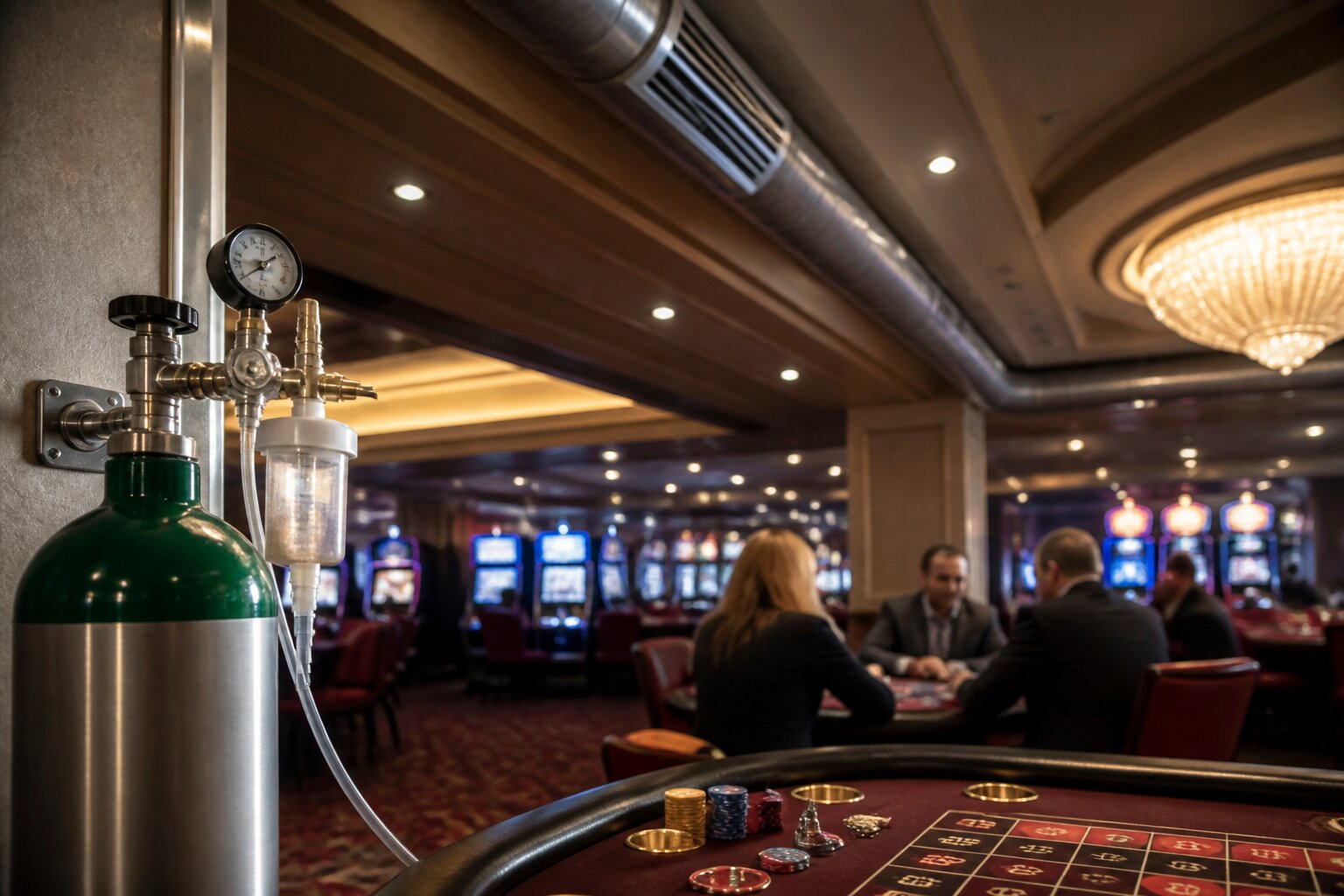
Casinos have always attracted curious stories and half‑heard rumours about what goes on behind the gaming floor. One of the most persistent claims is that venues secretly pump oxygen into the air to keep players alert and playing for longer.
This article examines that claim alongside a few other common casino myths, separating fact from fiction and explaining the real reasons behind many design and operational choices. Read on to discover what’s actually happening when you step inside a casino and what parts of the stories are simply misunderstandings.
What Is the Oxygen Pumping Myth?
The oxygen pumping myth holds that casinos deliberately add extra oxygen to their indoor air so customers feel less tired and stay at tables or machines for longer. Versions of the story imagine hidden pipes or vents delivering concentrated oxygen directly over gaming areas, creating a quietly engineered environment designed to encourage play.
That image is dramatic, which helps explain why the rumour endures. It taps into general anxieties about manipulation and control in public spaces, and the idea of an invisible change to the environment that alters behaviour is easy to picture.
Before we look at why people find the idea believable, the next section explores how the myth began and how it spread through popular culture. The tale has been passed along in newspaper columns, television shows and online forums, where repetition and dramatic detail help it gain traction even without solid evidence. Over time, the story has taken on different flavours, sometimes linked to anecdotes about specific casinos and sometimes presented as a wider industry secret.
Why Do People Believe This Myth?
Unfamiliar environments breed speculation, and casinos—by design—can seem unusual to first‑time visitors. Bright lights, unfamiliar sounds and the unusual mix of activity and calm can make these places feel staged or theatrical. When a space feels deliberately arranged to create a particular mood, it is natural for people to imagine hidden mechanisms behind that atmosphere.
The Origins of the Rumour
The rumour surfaced during the rise of large‑scale casinos, when new technology and theatrical presentation became part of the experience. As casinos grew larger and more sophisticated, managers used lighting, music and layout to guide guest movement and create an appealing environment. Observers noticed free drinks, dramatic lighting and efficient air conditioning and began to wonder whether other, more covert methods might also be in use.
That gap between visible comfort measures and perceived secrecy helped the oxygen story take hold. People tend to fill gaps in knowledge with explanations that fit the mood of the place, and the combination of commercial design and secrecy-friendly imagery made the notion of atmosphere‑manipulation a believable one for many.
How the Myth Spread
Entertainment media and word of mouth amplified those early whispers. Films, TV dramas and novels often portray venues as places of subtle manipulation, and those fictional depictions can colour how people interpret real world spaces. Anecdotes repeated by visitors gain colour with every telling, and a few dramatic retellings can turn a minor suspicion into a widely accepted notion.
Online discussion further extends these tales, where stories are shared widely and repeatedly without rigorous fact checking. As accounts circulate, they are often polished until they seem plausible even without firm evidence. The next section looks at whether any credible proof has ever been found to back up the claim.
Is There Any Scientific Evidence for Oxygen Pumping?
No reputable scientific study or investigation has found that casinos increase oxygen levels on gaming floors. Research into casino environments tends to address lighting, acoustics and safe ventilation, not artificial enrichment of oxygen.
Raising oxygen above normal atmospheric levels would be costly and could introduce safety hazards, particularly an increased fire risk. Regulatory frameworks for indoor air quality are designed to maintain fresh, healthy air rather than boost oxygen content, and experts who have looked into the matter regard the idea as implausible. With no documented cases or technical demonstrations to support it, the claim remains firmly in the realm of myth.
If venues were not altering oxygen, what then shapes visitor behaviour and the feel of a casino? The following section explains how normal design choices influence atmosphere and guest experience.
How Do Casinos Really Influence Guest Behaviour?
Casinos shape their environments to be welcoming and comfortable, using established hospitality principles rather than secret engineering. The aim is to provide a setting where guests feel at ease, can socialise, and can enjoy the facilities for as long as they wish. Design choices are typically driven by guest comfort, operational efficiency and regulatory requirements, rather than any attempt to overpower individual decision making.
Use of Lighting and Layout
Lighting is used strategically: brighter illumination focuses attention on games and tables, while softer light in lounges and restaurants creates a calmer space. Careful contrast and focal points help guests find their way and choose where to spend time. Floor plans are planned to be navigable, guiding guests between gaming areas, food and drink spots and other amenities without abrupt dead ends. Layouts are also designed to support staff supervision, emergency access and accessibility for people with reduced mobility.
Seating, carpeting patterns and sightlines are considered so visitors find the venue easy to move around and return to favourite spots. Fixtures and furniture are arranged to encourage natural social interaction and clear movement routes. Signage and wayfinding assist guests in navigating larger venues so they do not become disoriented and can make informed choices about where to go.
Sound, Scent, and Atmosphere
Background music and the natural sounds of play contribute to a lively ambience without dominating it. Volume levels and playlists are chosen to suit different areas, such as a relaxed soundtrack in dining areas and a more energetic feel on the gaming floor. Some venues introduce subtle scents through air systems to create a consistent sensory impression, favouring neutral, pleasant aromas that promote a feeling of cleanliness and comfort rather than anything designed to affect judgement.
These combined elements influence how long people stay simply by making the space comfortable, accessible and engaging. Operators must balance atmosphere with legal and safety obligations, and venues are subject to health, safety and licensing standards that prevent extreme or manipulative modifications to air quality, sound levels or other environmental factors. Next, we’ll cover the legal and safety boundaries that prevent extreme modifications to air quality or similar practices.
Are There Legal or Health Concerns With Pumping Oxygen?
Boosting oxygen levels in a public space would raise serious safety and legal problems. Higher oxygen concentration increases fire risks and can affect vulnerable individuals. Health and safety regulations require venues to maintain adequate ventilation and air quality, not to alter atmospheric composition.
Regulatory bodies set standards that operators must follow, and these standards make the oxygen‑pumping idea both unnecessary and non‑compliant. Any practice that threatened guest safety or contravened public health guidance would attract swift enforcement action. With that in mind, it’s useful to consider other myths that commonly circulate about casino operations and guest care.
Other Popular Casino Myths Debunked
A handful of other stories tend to circulate about casinos; clarifying them helps set realistic expectations about how venues operate and how guests are treated.
Alcohol and Complimentary Drinks
Some accounts claim casinos hand out free alcohol to encourage more gambling. In practice, many jurisdictions limit or control complimentary service and operators must follow local licensing rules and responsible service standards. Where free drinks are permitted, venues often have policies that restrict frequency and quantity to avoid encouraging excessive consumption.
Staff are usually trained to recognise signs of intoxication and to act in ways that protect guest welfare. That can include refusing service, offering non‑alcoholic alternatives, or directing a guest to assistance services. These practices form part of broader responsible gambling measures so customers can enjoy themselves without being put at risk.
Time and Clock Manipulation
There’s also a belief that casinos remove clocks and windows to make people lose track of time. While some spaces are intentionally self contained to preserve a particular atmosphere, modern venues commonly provide ways for guests to remain aware of time and spending.
This can include visible information points, staff who can help with queries, and clear signage about opening hours and facilities. Many operators also support responsible gambling tools such as time reminders and spending limits, so visitors can manage their visit in an informed way.
With the myths examined and the real practices explained, the final section wraps up what you need to know when considering casino rumours versus reality.
In short, myths can exaggerate or misunderstand how casinos work. Operators are generally bound by regulations and industry standards that aim to protect customers, promote responsible behaviour and ensure fair play. Being aware of the rules and available support helps anyone make sensible choices about their visit.
Final Thoughts: Reality vs Casino Myths
The oxygen‑pumping story is compelling but unsupported by evidence and contradicted by safety rules and practical considerations. Casinos rely on design, service and regulation to create environments that are comfortable and enjoyable, not on covert air manipulation.
Understanding the techniques and limits of venue design helps separate spectacle from fact. Knowing what is realistic—and what would be unsafe or illegal—lets visitors appreciate casino environments for what they are: places built around hospitality and entertainment within clear safety and regulatory frameworks. If you visit a casino, you can expect a controlled, professional setting where the surroundings are crafted for comfort rather than covert influence.
**The information provided in this blog is intended for educational purposes and should not be construed as betting advice or a guarantee of success. Always gamble responsibly.