
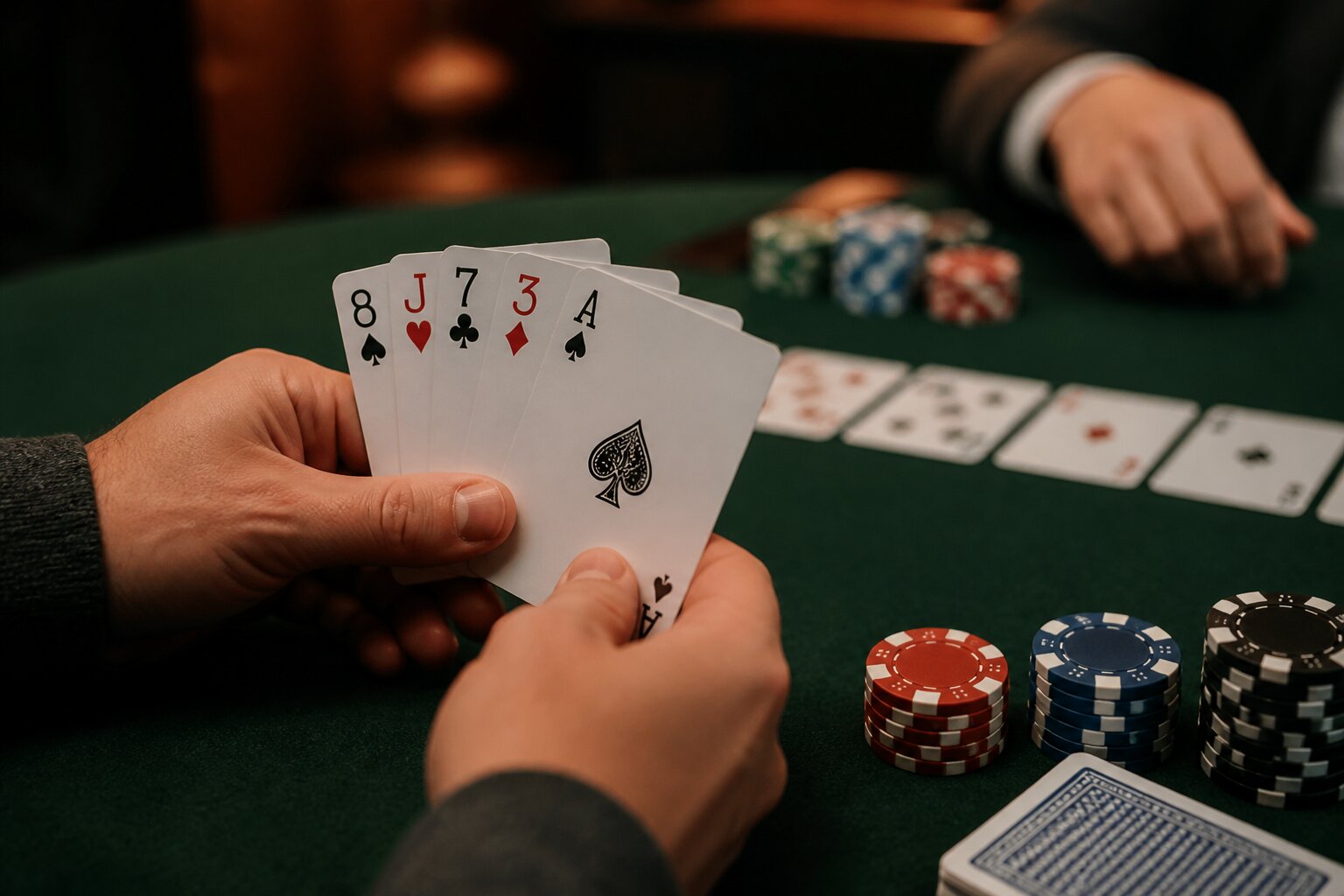
Looking for a simple yet engaging way to enjoy poker? 5 Card Draw is a classic that’s ideal for newcomers and for anyone who wants a change from games with community cards.
This guide covers what the game is, how a typical round unfolds, the standard hand rankings, and how to play online safely. Read on to build a clear picture of the game and feel confident at the table.
What Is 5 Card Draw Poker?
5 Card Draw is a straightforward form of poker that focuses on the cards you hold and the choices you make about which to keep or exchange. Each player receives five cards face-down and has a single opportunity to replace some of them, aiming to make the best five-card hand possible before a final reveal.
Because there are no community cards and only one draw, the game emphasises hand-reading and bet sizing rather than the more complex strategy seen in games with multiple betting streets. It’s a popular format for friendly home games and as a learning step for players moving from basic rules to deeper strategy.
How Do You Play 5 Card Draw Poker?
A typical game runs with a small group and a single 52-card deck. Play begins with an initial wager to seed the pot, and then cards are dealt so each player holds five hidden cards. After an opening round of betting, players who remain have the opportunity to exchange unwanted cards for fresh ones from the deck, attempting to improve their hand. A final betting round follows, and any remaining players compare hands to determine the winner.
This sequence keeps the play focused and quite direct: make a hand, decide how much information to show with your betting, try to improve at the draw, then make a last decision before the showdown. The balance between folding early and investing to see the draw is one of the strategic tensions that gives the game its appeal.
Dealing, Betting & Drawing: Step-by-Step Play Explained
Dealing begins with each player receiving five cards, dealt face-down so only the holder can view them. After the deal, an initial betting phase lets players signal the relative strength of their hands or fold if they prefer not to continue.
When play reaches the draw phase, those still involved choose which cards to discard. Most games limit discards to three cards, though some variants allow different rules about the number of replacements. Discarded cards are replaced from the top of the remaining deck, and players then face a final round of betting. The outcome is decided at the showdown, where the highest-ranking five-card combination among active players takes the pot; identical hands split it.
Throughout, the dealer manages the deck and ensures discards and replacements are handled properly, preserving fair play.
What Are the 5 Card Poker Hand Rankings?
Understanding the standard poker hand rankings is essential because the best five-card hand wins the pot. Below are the recognised hands from strongest to weakest, with brief examples and a little extra detail to make each clear.
Poker Hand Rankings (Strongest to Weakest)
Note that suits have no ranking relative to each other. When two hands have the same rank, the winner is decided by the highest relevant cards, often called kickers, or by the next-highest cards in sequence.
Royal Flush
Ace, King, Queen, Jack, Ten of the same suit, the highest possible hand. There is no higher hand, and any royal flush ties only with another royal flush, in which case the pot is split.
Straight Flush
Five consecutive cards of the same suit, for example eight through four of clubs. A straight flush is beaten only by a higher straight flush or a royal flush.
Four of a Kind
Four cards of the same rank plus any fifth card. The fifth card is the kicker and decides the winner if two players hold the same four of a kind.
Full House
Three cards of one rank and a pair of another rank. When two players have full houses, the rank of the three-of-a-kind part is compared first, then the pair if needed.
Flush
Five cards of the same suit that are not in sequence. When two players have flushes, the highest card in each flush is compared, then the next highest, and so on until a winner is determined.
Straight
Five consecutive cards of mixed suits. The value of a straight is determined by its highest card; an ace can count high (above a king) or low (below a two) but cannot be both in the same hand.
Three of a Kind
Three cards of the same rank with two unrelated side cards. If two players have three of a kind, the higher set wins; if tied, the side cards act as kickers.
Two Pair
Two different pairs plus a fifth card that does not pair. If players have the same two pairs, the highest fifth card decides the winner.
One Pair
A single pair and three other side cards. When two players have the same pair, the three side cards are compared in descending order to break the tie.
High Card
When no other combination applies, the highest individual card determines the winner. If the highest cards are the same, subsequent cards are compared until the tie is broken.
Common Hand Examples in 5 Card Draw
In practice, pairs and two-pair hands are the most frequent outcomes, reflecting the limited information and the single card exchange allowed in many 5 Card Draw variants.
Straights and flushes appear less often, while full houses and four of a kind are comparatively rare. All these hands are possible, but their differing frequencies affect how you should set realistic expectations.
Recognising the relative commonness of each category helps you make sensible decisions at the table and manage risk responsibly.
Essential Rules: What You Can and Cannot Do
The rules of 5 Card Draw are designed to keep play clear and fair. Each player may draw only once per round, and discarded cards are replaced from the deck so that every participant still in the hand has an equal chance to improve. Players must act in turn and keep their cards hidden; revealing information or colluding with others undermines fairness and is not acceptable.
Betting must follow the established order at the table, and once a player has acted on a betting round their decision stands. The dealer is responsible for managing the deck and the exchange of cards; tampering with the deck or using marked cards is strictly prohibited. Respectful conduct and adherence to house rules help ensure an enjoyable session for everyone.
Can You Play 5 Card Poker Online?
5 Card Draw is available online in both cash and tournament formats. Reputable platforms that operate under regulatory oversight use audited random number generation to help ensure fair dealing and apply secure procedures for handling player funds.
When choosing where to play, opt for regulated sites that provide practical account controls. Useful features to look for include:
- deposit limits to help manage spending
- session reminders to encourage breaks
- self-exclusion options and reality checks
Verification checks are a normal part of the process. Sites must confirm age and identity to meet legal obligations, which helps prevent underage play and reduces fraud.
These safeguards make online play safer and more transparent, but always play responsibly. Read a site’s terms and conditions and responsible gambling information before you start.
Frequently Asked Questions About 5 Card Draw Poker
Below are answers to common queries about the game, aimed at clarifying typical concerns and helping you make sensible choices at the table.
Is 5 Card Draw the same as regular poker?
5 Card Draw is one form of poker, distinct from variants like Texas Hold’em because each player uses only their own cards and there is a single draw phase, rather than shared community cards.
How many players can join a game?
Games usually work best with two to six players. Larger groups can play but may require multiple decks or adjusted house rules to keep play practical.
Can I play 5 Card Draw Poker for free?
Many online sites offer play-money tables or demo modes where you can practise the game without wagering real funds. This can be helpful for learning hand ranks and betting patterns before playing for money.
How do I know if a site is safe to play on?
Look for platforms subject to reputable regulation, which demonstrate secure handling of personal data and accounts. Responsible-play tools and transparent terms are useful indicators of a trustworthy site.
What should I do if I feel my gambling is becoming a problem?
If play starts to cause worry, take advantage of the account controls provided by licensed operators, such as deposit limits or time-outs. For additional support, confidential advice and resources are available from specialist organisations.
Enjoy the game in a way that suits you, keep sensible limits, and use the rules and hand rankings here to guide your decisions at the table.
**The information provided in this blog is intended for educational purposes and should not be construed as betting advice or a guarantee of success. Always gamble responsibly.