
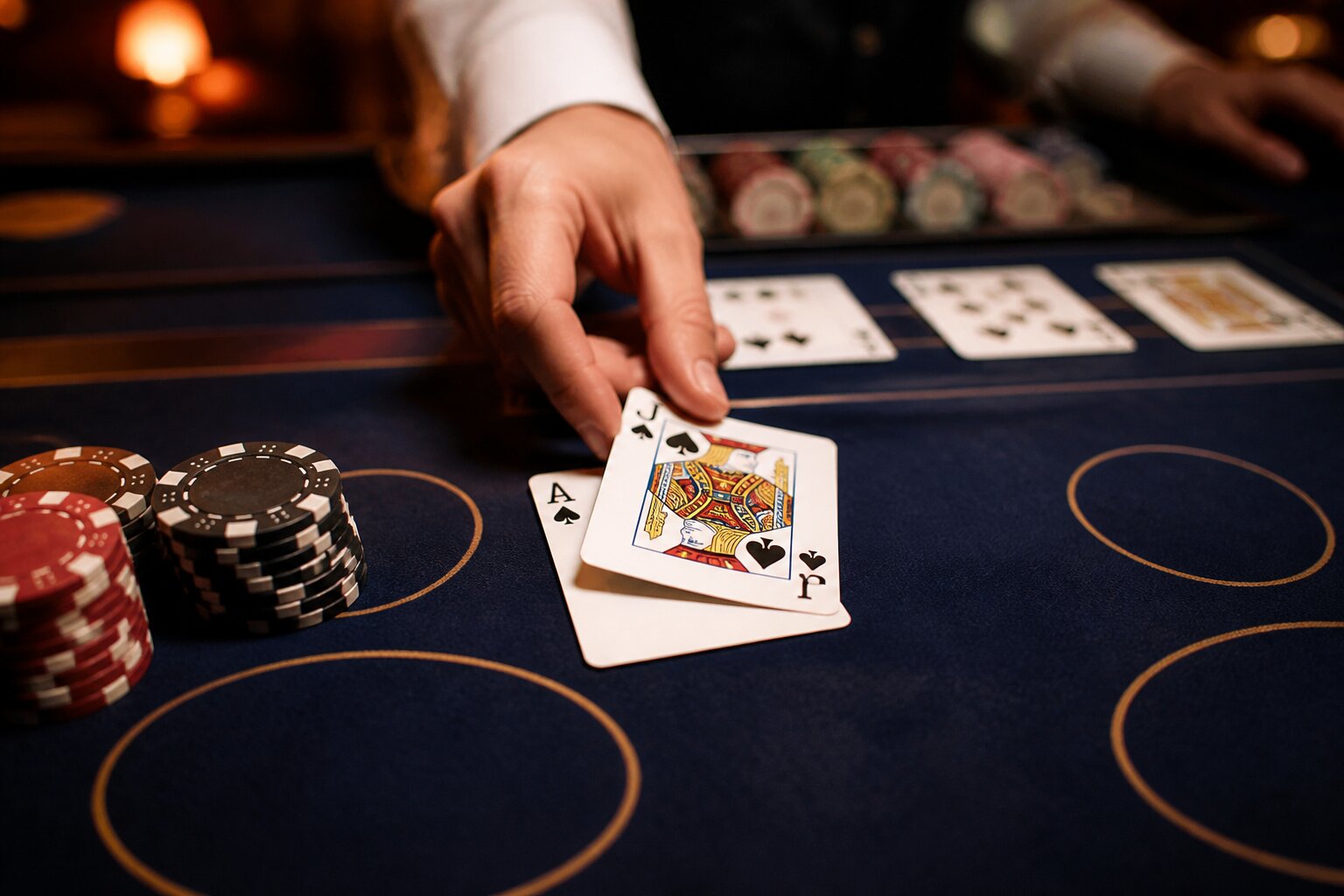
Fancy a new twist on the classic card game? British Blackjack, often called Pontoon, puts its own spin on familiar blackjack rules and is played across pubs, homes and online in the UK. This guide walks you through the essentials — how hands rank, what the special seven-card rule means, and the key terms you’ll hear at the table.
Whether you’re just starting or brushing up, the aim is the same: make informed choices and enjoy the game. A quick note: you must be at least 18 to play for real money.
What Is British Blackjack?
British Blackjack is a variant of blackjack with a few rule differences that change strategy and outcomes. The basic objective remains to form a hand as close to 21 as possible without exceeding it, but the names and priorities of certain hands are different. For example, a two-card 21 is called a pontoon, and a five-card hand totalling 21 or less is a five card trick — a hand that outranks many other combinations.
Games can be played socially or in licensed venues and online. The format often produces brisk, social rounds with slightly altered tactics compared with classic blackjack, thanks to the way cards are dealt and the special hands that receive priority.
How Does British Blackjack Differ From Traditional Blackjack?
Several features set British Blackjack apart from standard casino blackjack. One of the most noticeable is the way dealer cards are handled: both dealer cards are typically dealt face down in British Blackjack, increasing uncertainty about the dealer’s position until later in the round. Terminology is different too — players “twist” for another card and “stick” to keep their hand — and certain hands have special status, as already introduced.
Another key difference is the ranking of hands. A pontoon beats everything except specific exceptions, and a five card trick beats any 21 built from fewer cards. These distinctions change how players value drawing additional cards and when they may choose to take risks with their hand.
That shift in priorities affects how players approach the game, making it feel familiar yet strategically distinct from classic blackjack. Read on to see how the seven-card rule fits into that picture.
Understanding the 7 Card Rule in British Blackjack
The 7 card rule, sometimes called a seven-card Charlie or seven-card trick, rewards players who manage to draw seven cards without the total exceeding 21. When a player reaches seven cards with a total of 21 or less, that hand is usually treated as an automatic winner against the dealer’s hand, regardless of the dealer’s total.
It’s a rare outcome because drawing seven cards without busting requires low card values or careful decisions during play. Because of how it changes priorities, the seven-card rule can encourage different choices during play compared with games without it — players might be more inclined to twist in pursuit of the seven-card advantage when the totals permit.
How to Play British Blackjack: Step-By-Step
Learning the flow of a round helps you follow play and understand how outcomes arise. A typical deal starts with players placing their bets, then receiving two cards; the dealer also receives two cards, both usually face down. From there, players decide how to proceed based on their hand and the rules at the table, while keeping in mind how special hands such as puntaon, five card tricks and the seven-card rule are prioritised.
Play proceeds with each player resolving their hand before the dealer reveals and plays theirs. When everyone has finished, the dealer’s hand is compared to the remaining player hands to determine outcomes. Payouts and losses follow the house rules in effect for that table, so it is important to check the specific table rules and payout structure before you start.
Player Actions Explained
Players use a small set of actions to shape their hands and respond to the table situation. These are described here so you understand what each option does and when it might be applied.
- Twist: Take an additional card to try to improve the hand. Players must weigh the potential gain against the risk that the new card pushes the total over 21, and consider visible dealer and table cards when deciding.
- Stick: Decline further cards and wait for the dealer to play. Once you stick, you cannot take more cards for that hand and must accept the outcome against the dealer’s eventual total.
- Buy: Increase the stake and receive a single additional card, usually dealt face down. This option is typically available only when the hand contains two, three or four cards, and it alters both the hand’s potential value and the amount at risk.
- Split: Separate two initial cards of the same rank into two distinct hands, each carrying its own bet. Each hand is then played independently against the dealer, which can increase winning opportunities but also increases exposure to loss. Rules on resplitting and restrictions on splitting certain ranks vary by house.
Players should be aware that table rules differ and that some options may not be offered or may carry specific restrictions. Always check the posted rules and ask the dealer or floor staff if anything is unclear.
Twist
Twist means taking an additional card to improve a hand. Players must judge the likely benefit against the risk that the new card will take them over 21. Considerations include the dealer’s visible cards, the number of decks in play, and the potential value of the extra card.
Deciding to twist is a balance between probability and risk appetite, and sensible play involves making that choice with a clear understanding of the game rules at the table.
Stick
Stick signals that the player is satisfied with their hand and declines further cards. Once a player sticks, they await the dealer’s play to see the final outcome. Sticking can be the correct choice if the chances of improving are low or if the risk of busting is too high.
Buy
Buying lets a player increase their stake and take a single additional card, which is usually dealt face down. This option can only be used when the player’s hand has two, three or four cards, and it raises the stakes while changing the hand’s potential value.
Because buying changes both the bet and the information available to opponents, players should be sure they understand how buys are treated under the specific house rules before choosing this option.
Split
When a player’s initial two cards share the same rank, they may split them into two separate hands, each with its own bet. Each hand is played independently against the dealer, creating more opportunities but also increasing exposure to loss.
Depth of detail for splitting varies by casino: some tables allow resplitting, others limit which ranks can be split, and different payout rules may apply to split hands. Check the table rules so you know exactly how splitting will be handled.
Dealer's Role and Card Dealing Process
The dealer follows a fixed procedure after players have completed their actions. They reveal their cards and play according to the house rules, typically drawing until they reach a minimum threshold, commonly 17, at which point they stop.
If the dealer’s total exceeds 21, players who remain in the round win. If not, hands are compared to decide winners and losers. The dealer’s mandated progression is important because it affects the mathematical odds of taking extra cards and helps players assess whether it is worth taking further action during their turns.
Remember that specific dealer procedures, including how and when cards are revealed and whether certain hands beat others automatically, are set by the venue and should be reviewed before play.
What Are the Card Values and Hand Rankings?
Card values are straightforward: number cards count at face value, picture cards (Jack, Queen, King) count as 10, and an Ace can be worth either 1 or 11 depending on which value benefits the hand without exceeding 21.
Hand rankings determine which hands beat which. At the top sits the pontoon — a two-card 21 formed by an Ace and a 10-value card. Next is the five card trick, which is any five-card hand totalling 21 or less. Any 21 formed with three or more cards ranks below a five card trick but above other totals. Hands under 21 rank according to their numerical total, with ties commonly resolved in the dealer’s favour under standard rules.
Knowing these values and priorities is useful when deciding whether to twist, stick or use options like buying or splitting.
When Does a Player Win in British Blackjack?
A player wins a round when their hand ranks higher than the dealer’s without exceeding 21, or when the dealer busts and the player’s hand remains valid. The strongest outcomes are a pontoon and a five card trick, followed by other hands that are closer to 21 than the dealer’s. If a player and the dealer have the same total, house rules often award the win to the dealer; familiarity with the specific table rules helps avoid surprises.
The presence of special rules such as the seven-card win condition also affects which hands are most valuable in a given round, influencing player decisions as play unfolds.
Common Myths About British Blackjack
There are several misunderstandings that circulate about British Blackjack. Clearing them up helps players make better decisions and keep expectations realistic.
Myth 1: Skill Guarantees a Win
Knowledge of the rules and smart decision-making improve how you play, but they cannot ensure a win every round. Outcomes vary each deal, and sound play is about managing risk rather than guaranteeing results.
Myth 2: The Dealer Can Be Predicted
Because cards are shuffled and dealt according to standard procedures, guessing the dealer’s hand with certainty isn’t possible. Decisions should be based on the visible rules and your own hand rather than perceived patterns.
Myth 3: Chasing Losses Will Help You Win
Increasing stakes in an attempt to recover losses often leads to larger losses. A measured approach to stakes keeps play within personal limits.
Myth 4: Certain Systems Guarantee Profits
No betting system can change the underlying probabilities of a hand. Use strategies to manage your game but treat them as ways to structure play rather than as ways to secure profit.
These clarifications support a practical approach to the game and help prevent unhelpful expectations.
Frequently Asked Questions About British Blackjack
People often want to know where to find the game, how it compares to other variants, and what to do if they need support.
Can I play British Blackjack online in the UK?
Yes. British Blackjack, often labelled Pontoon, is offered by many online operators. Use regulated sites and check age and identity requirements before playing for real money.
What’s the main difference between British Blackjack and classic blackjack?
Key differences include how dealer cards are dealt, the terminology used, and the priority given to hands such as pontoons and five card tricks. These changes affect decision-making during play.
Does counting cards help in British Blackjack?
Card counting is not a practical approach in many modern environments, especially online where shuffling and dealing procedures prevent reliable tracking. Focus on understanding the rules and how different hands rank.
How much should I bet per game?
Decide on affordable limits before you start and stick to them. Betting within a predetermined budget helps keep play manageable.
Is help available if I think I have a gambling problem?
Yes. Support organisations provide confidential advice and treatment for anyone who needs it. Reaching out early can make a big difference.
With a clear sense of the rules and priorities described here, you should be well placed to follow a game and make informed choices at the table. If you’d like to try a hand, review the house rules where you play so you know which options and payouts apply.
**The information provided in this blog is intended for educational purposes and should not be construed as betting advice or a guarantee of success. Always gamble responsibly.