
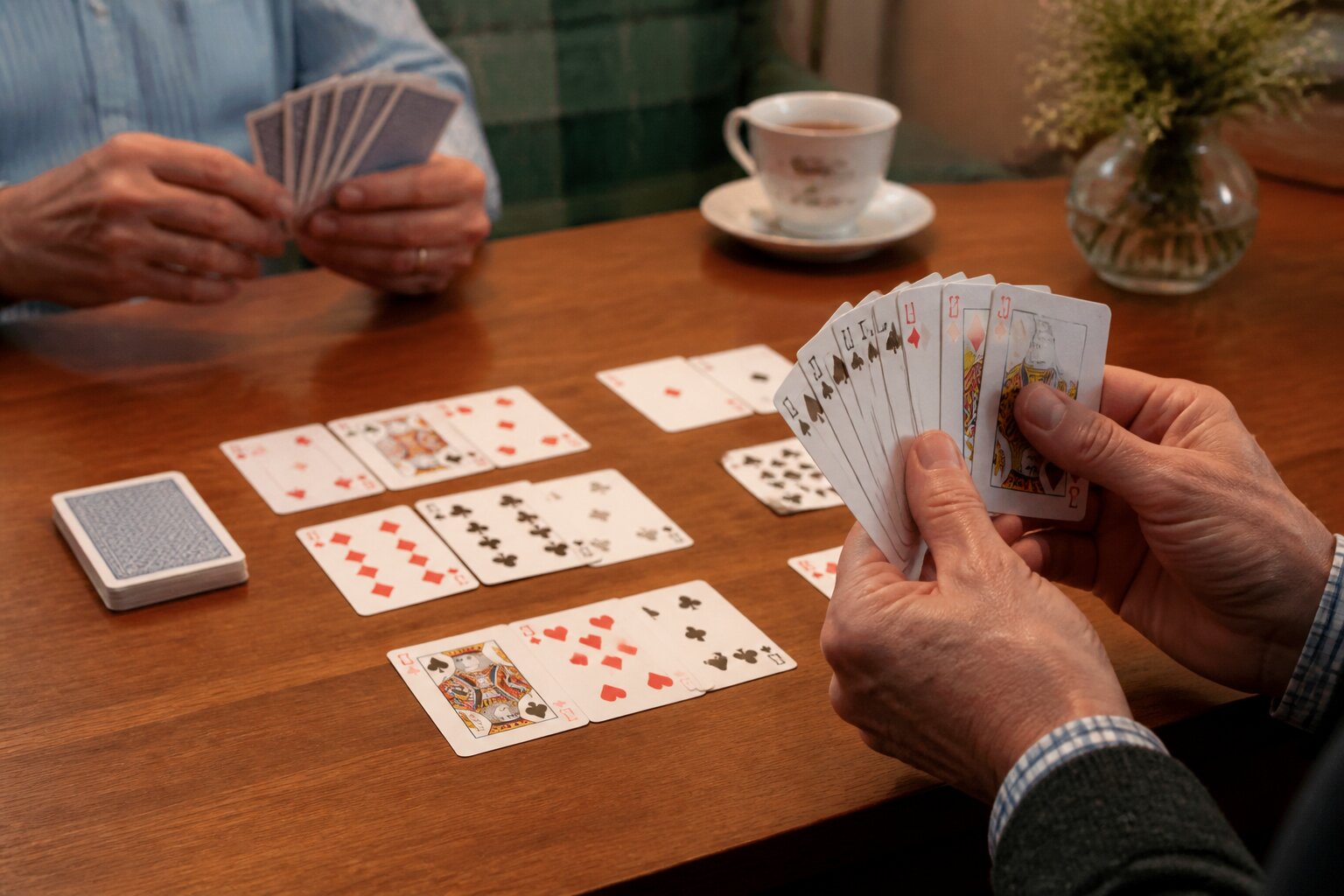
Looking to master one of the world’s most popular card games? Whether you’re around a kitchen table or playing online, Rummy is easy to learn and rewarding to play.
If the rules feel confusing at first, you’re not alone. With a few clear guidelines and the right number of cards, you’ll be ready to join a game and enjoy the strategy involved.
Keep reading and you’ll move from basic concepts to practical play, with examples that make each rule simple to follow.
What Is the Rummy Card Game?
Rummy centres on grouping cards into melds — either sets (same rank, different suits) or runs (consecutive cards of the same suit). Each player tries to form these melds by drawing and discarding cards, and the first to arrange their hand into valid combinations wins the round.
The game is adaptable: rules, number of cards dealt and whether jokers are used can change with different versions. That flexibility is part of Rummy’s appeal; once you know the core ideas, variations are easy to learn.
If money is involved, make sure everyone is of legal age and agrees on limits before play begins. This keeps the focus on skill and fair competition.
What Cards Do You Need to Play Rummy?
A standard 52-card deck is the usual starting point, with four suits and ranks from Ace to King. Most casual games use a single deck, which suits small groups and simpler variants.
Larger groups sometimes combine two decks so everyone has enough cards and there are enough duplicates for more complex melds. When two decks are used, gameplay can feel slower and sets are easier to form, because there are more matching cards available.
Jokers are optional. When included, they act as wild cards and can substitute for missing cards in a set or run. Some games use a single printed joker, others add both jokers from each physical deck, so check how many jokers the rules call for before you start.
Different Rummy variants specify their deck setup, so always check the rules you are using before play begins. For example, versions differ in how they treat the Ace:
- some treat the Ace as high only, so it follows the King in runs,
- others allow the Ace to be low only, placing it before the Two,
- some permit the Ace to be both high and low, which affects which runs are legal.
Other rule variations that affect the deck and dealing include:
- how many cards each player is dealt at the start,
- whether a stock and discard pile are used,
- and whether certain cards are permanently wild or become wild during play.
Confirm these details with your group to avoid disputes, and agree the deck configuration before the first hand.
How Many Players Can Join a Game of Rummy?
Rummy works well with two to six players. Two-player games commonly use a single deck; as the number of players increases, adding an extra deck keeps the card pool healthy and play flowing smoothly.
Player count also affects several practical aspects of the game:
- how many cards each player is dealt
- the typical length of a round
- whether one or more extra decks are used
Groups with mixed skill levels often agree house rules beforehand so everyone has the same expectations. This can include decisions about scoring, wild cards, melding rules and how strict to be on minor mistakes.
Before starting, confirm that everyone is eligible to play for money if that’s part of your game. Legal-age requirements must be met and any local gambling laws respected.
How Do You Set Up a Game of Rummy?
Begin by shuffling the deck thoroughly so the deal is fair. The dealer is chosen by an agreed method, such as cutting for the highest card. Cards are dealt one at a time in a clockwise direction until each player has the agreed number.
Typical deals are 10 cards each in two-player games and 7 cards each for larger groups, though variants may differ. The remaining cards form the draw pile, placed face down in the centre, and the top card is turned face up beside it to start the discard pile.
Agreeing any house rules and clarifying how jokers or Aces are handled before the first round prevents disputes later and keeps the game moving.
How Do You Deal the Cards in Rummy?
The dealer distributes cards one at a time, clockwise, until every player has their hand. Deal continues in this single-card rotation so that no player receives consecutive cards from the deck. After dealing, the remaining cards become the draw pile and the top card is flipped to start the discard pile.
This simple arrangement sets up the core turn sequence, which keeps rounds structured and predictable. The sequence on each turn is:
- draw a card,
- organise your cards into melds,
- discard a card.
Players are given a short period to sort their hands and decide their opening strategy once the piles are ready. When everyone is ready, play begins with the player on the dealer’s left, who takes the first full turn following the draw-organise-discard pattern.
What Are the Basic Rules of Rummy?
Play moves clockwise and each turn follows the same pattern: a player draws a card, examines their hand to form or improve melds, then discards one card. The objective is to arrange your entire hand into legal sets and runs.
Sets are three or four cards of the same rank in different suits; runs are three or more consecutive cards in the same suit. Jokers, where permitted, can substitute for missing cards within those melds.
When a player believes their hand consists entirely of valid melds, they declare to end the round. Other players then reveal their hands and tally points for unmatched cards, using the agreed scoring system. Rounds continue until a target score or number of rounds decides the winner.
How Do You Take Turns in Rummy?
Each turn gives a player a chance to change their hand towards a full set of melds. The process is consistent and keeps play fair for everyone. A typical round moves steadily so each player has an equal opportunity to draw, plan and discard.
Drawing
At the start of a turn, a player draws one card. This can be the top card from the face-down draw pile or the top card from the face-up discard pile, depending on which better helps form melds.
Choosing where to draw from involves different trade-offs:
- Drawing from the discard pile gives information about other players’ plans and can be used tactically to complete or block melds.
- Drawing from the deck preserves secrecy about your hand and keeps opponents guessing.
Deciding which option to take is an important tactical choice and will vary as the hand develops.
Discarding
After drawing and adjusting their hand, the player discards one card face up on the discard pile, returning their hand to the agreed size. This discard may be taken by the next player if it serves their needs, so thinking ahead about what you discard is important.
A good discard strategy balances the immediate need to improve your hand with the risk of helping an opponent. Watching which cards remain visible on the table and noting opponents’ previous picks and discards helps inform safer choices.
Understanding how draws and discards interact with opponents’ visible cards is a key strategic element in Rummy. Careful observation, selective drawing and mindful discarding all contribute to better play over the course of a game.
How Do You Form Sets and Runs?
Forming melds is the central task in Rummy. A set combines three or four cards of the same rank from different suits — for example, three 7s in different suits. A run is a sequence of three or more cards in the same suit, such as 4–5–6 of diamonds.
Jokers, when allowed, can replace a missing card in either a set or a run, but house rules often specify limits on their use. A complete hand for declaration must be made up entirely of valid sets and runs, with at least one run required in many versions.
Careful attention to which cards are visible in the discard pile helps you decide which melds to pursue.
What Counts as a Valid Declaration in Rummy?
A valid declaration is made when a player’s entire hand is arranged into the required sets and runs and fulfils any variant-specific rules. This means every card in the hand must be part of a recognised meld, with no loose cards left ungrouped.
Variant-specific requirements can vary. Common examples include:
- minimum run length, for example three or more cards in sequence
- mandatory pure runs, meaning a run formed without jokers
- restrictions on the number of jokers that may be used in sets or runs
Once a player declares, the other players or the table will check all melds for correctness. If a meld is found to be incorrect the declaration may be challenged and, depending on the house rules, this can lead to penalties such as loss of the round or additional points being awarded against the offender.
If the declaration meets the agreed criteria, the round ends and scoring proceeds according to the rules in use. Clear agreement on declaration rules before play starts avoids confusion at this critical moment and reduces the chance of disputes affecting the outcome.
Are There Any Common Rule Variations in Rummy?
Rummy has many recognised variants that alter dealing, jokers, scoring and declaration requirements. Indian Rummy, Gin Rummy and Kalooki, for example, differ in several key ways:
- hand sizes,
- use of jokers,
- what constitutes a legal declaration.
These differences can change how hands are built and which melds are most valuable.
Other common house changes involve how many jokers are used or whether a pure run is mandatory. Some groups also tweak scoring rules, such as point penalties for undeclared cards or bonus points for particular melds. Because such variations affect strategy and scoring, groups usually state which version they are playing before the first deal to avoid disagreements.
Knowing the variant in advance helps players choose suitable tactics and keeps the game fair. It also reduces disputes about declarations and scoring, and makes it easier to compare results whether you play in person or on an online platform.
What Are Some Typical Misunderstandings About Rummy Rules?
Players often slip up on a few recurring points. One is confusing sets and runs; they serve the same goal but are distinct formations. Another is the role of jokers — they can substitute for cards but don’t always make a run “pure” unless the rules allow it. Declaring prematurely or assuming any grouping counts as a valid declaration are other frequent errors.
A subtle but important point is the order of play: drawing comes before discarding every turn. Misunderstandings here can lead to disputes, so reconfirming basic rules at the start avoids interruptions.
If you ever run into ambiguity during a game, pause and agree the interpretation with the group before continuing.
**The information provided in this blog is intended for educational purposes and should not be construed as betting advice or a guarantee of success. Always gamble responsibly.