
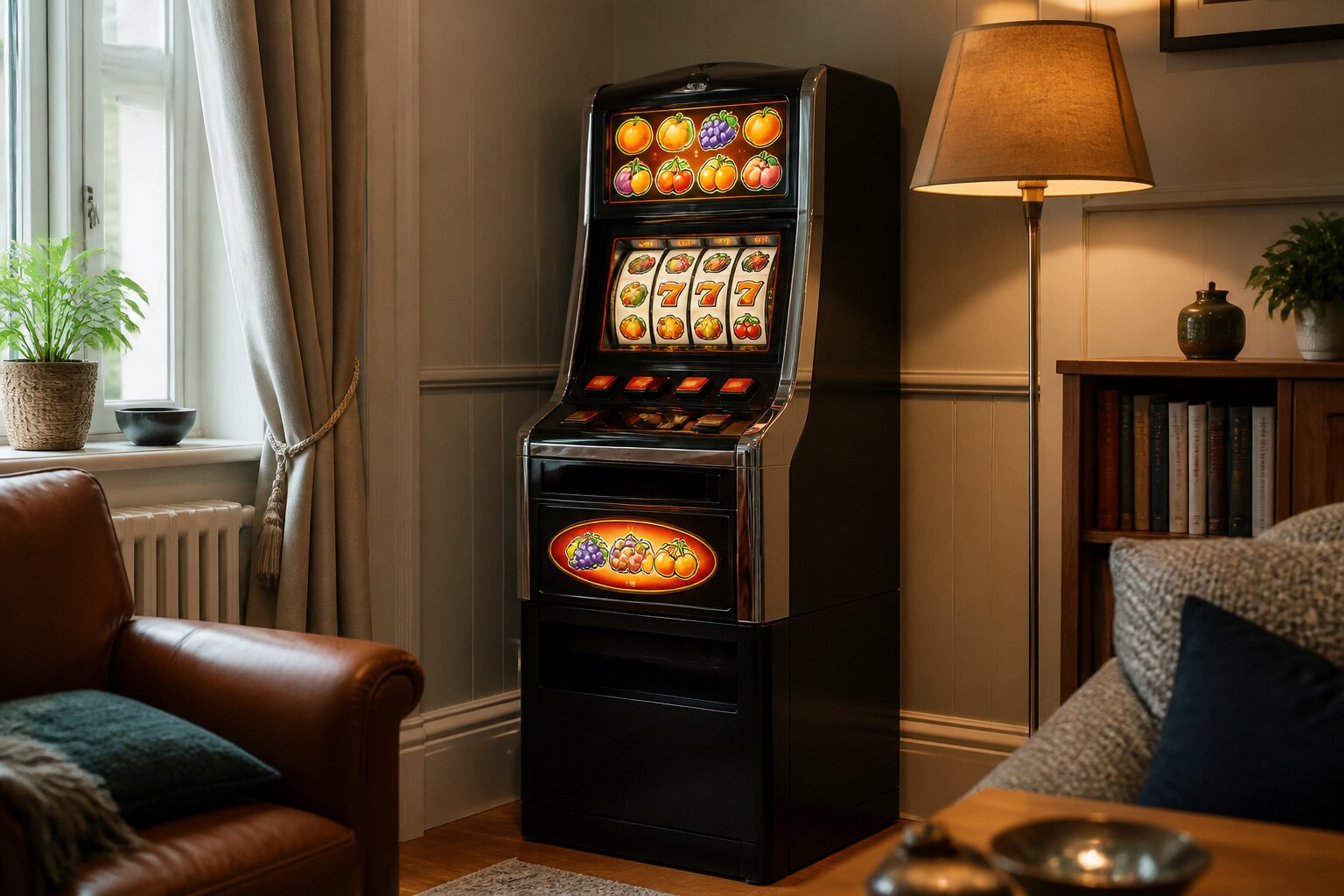
Ever wondered what it would be like to have your very own slot or fruit machine at home? Perhaps you’ve seen one for sale online, or you’re tempted by the idea of bringing a classic gaming cabinet into your living room.
Before you press play on that idea, it’s important to know exactly what the law says. Things are not always straightforward when it comes to gaming machines, even if they are intended only for personal use.
In this article we look at what is allowed, which rules matter most, and the practical points to check before buying or owning a slot or fruit machine in the UK. Read on to make sure you stay on the right side of the law.
What Laws Govern Private Slot and Fruit Machine Ownership?
In the UK, private ownership of slot and fruit machines is primarily covered by the Gambling Act 2005. The Act sets out how different kinds of gambling devices may be used, who can supply them, and the conditions that separate private use from commercial or public use.
The Gambling Commission enforces the Act and issues guidance about machine categories, permitted settings, and the responsibilities of owners and suppliers. Machines intended for public or commercial use are subject to stricter controls than those kept for private entertainment, so it is important to check a machine’s classification and any accompanying paperwork before purchase.
A key legal distinction is whether a machine is used strictly for private, non-commercial purposes at a private address. If it is, a licence is usually not required. But that status can change if the device is used to accept money, offer prizes, or is made available to the public.
Do You Need a Licence to Have a Slot or Fruit Machine at Home?
If a machine remains in a private home and is used only for personal entertainment, a licence will generally not be required. The moment the machine is used for commercial reasons, public play, or to facilitate gambling for money or prizes, licensing and permissions become necessary.
There are also rules where a private setting becomes effectively public, for example when a home is used regularly for events or as part of a business. In those cases the operator must comply with the relevant licence requirements and standards applied by regulators.
As owner, you are responsible for ensuring the machine’s use matches its permitted status. That means checking how the machine has been configured, understanding any restrictions printed in its documentation, and being clear about how others may interact with it.
It is sensible to review the machine’s paperwork and, if in doubt, seek guidance from a regulatory source before placing it in a home environment.
Restrictions on Using Slot and Fruit Machines at Home
Having a slot or fruit machine at home carries specific restrictions about how it can be used and who may use it. The law aims to prevent private machines from becoming a conduit for commercial or organised play, and those principles shape the main limits.
A private machine must not accept money, be used to award prizes, or be operated in a way that resembles a public amusement. Even informal arrangements where visitors are charged small amounts to play, or where prizes are offered, will usually move the activity out of the private category and into regulated territory.
Similarly, continuing use by people beyond the household on a regular basis, for example at repeated social gatherings that resemble events, can also change the classification of the machine.
Who Can Play Your Home Slot or Fruit Machine?
Only adults aged 18 or over may legally use a slot or fruit machine. That applies both to ownership and to permitted users. Under-18s should not have access to these devices, even if play involves no money or prizes.
Ensuring appropriate supervision, physical access control, and clear rules about use helps meet the legal expectation that private machines remain within a mature environment and are not available to minors.
Buying and Selling Slot and Fruit Machines in the UK
When buying or selling a machine, age and provenance are central considerations. Only adults aged 18 or over are permitted to buy, own, or sell these devices. Sellers should be able to show documentation that describes the machine’s category and whether it is authorised for private use.
Purchasing from a reputable supplier or a trader who can confirm a machine’s compliance with UK requirements reduces the risk of acquiring equipment that has been modified or is intended for commercial use. Private adverts and overseas purchases can be riskier if the machine lacks the correct paperwork.
It is also an offence to supply a machine to someone under 18, and to sell machines without the necessary disclosures. Ensuring clear terms of sale, keeping receipts, and checking that the device has not been altered after manufacture are sensible precautions.
If you are unsure about a sale, the safest option is to pause until you have checked a regulatory source or obtained independent advice.
Are There Age Restrictions for Owning a Slot or Fruit Machine?
Yes, ownership and responsibility for these machines are restricted to adults aged 18 or over. This requirement helps protect young people and ensures gaming equipment remains under adult supervision at all times.
Buying a machine on behalf of a minor, or allowing a minor to use one, is not compliant with the law. Owners must take reasonable steps to prevent under‑18s from accessing machines.
Practical steps owners should take include:
- storing machines in locked rooms or cabinets when not in use
- keeping keys and access codes secure and only with responsible adults
- supervising any use to ensure minors do not play the machine
Failure to follow these rules can lead to legal penalties and enforcement action, so it is important to remain vigilant and to treat age restrictions seriously.
Common Myths About Private Slot Machine Ownership
There are several common misunderstandings that lead people into trouble. One is the belief that a private address automatically permits any form of play. In truth, how a machine is used determines its status, not only where it is located.
Another myth is that older or second-hand machines are exempt from regulation. Machines can be subject to rules regardless of age if they are capable of facilitating gambling or if their configuration has been altered.
Some assume it is acceptable for minors to use a private machine if no money is involved. However, the age restriction on use remains in force irrespective of stakes.
Finally, not all machines are regulated in the same way. Different categories of machine carry different legal requirements, so it is worth confirming the classification shown in a machine’s documentation or by a supplier.
If any of these points are unclear when you are looking to buy or use a machine, checking the official guidance will clarify how the law applies to your specific situation.
What Are the Penalties for Breaking Slot Machine Laws?
Penalties for breaching the rules can be significant. Authorities may impose fines, confiscate machines, or pursue prosecution when a device is used outside its permitted context. In serious cases those found to be operating or supplying machines illegally can face court action.
Consequences can follow from apparently small errors, such as allowing payment to be taken for play at a private event, or failing to check the provenance of a machine before purchase. Records and paperwork are important, as they show whether an owner took reasonable steps to comply.
For sellers, supplying machines without proper documentation or to those under 18 increases the risk of enforcement action. For buyers, acquiring equipment from unverified sources can leave you exposed to penalties if the device is later found to be non-compliant.
Where questions remain about a specific machine or situation, obtaining authoritative guidance is the most reliable way to reduce legal risk.
Summary: Staying Compliant with UK Slot Machine Laws
To stay compliant with UK law when owning a slot or fruit machine at home, keep the following points in mind.
Only adults aged 18 or over may legally buy, own, or be responsible for these machines.
Machines must not be used for commercial gambling, prize-play, or regular public use.
Under-18s must not have access to play, even if no money is involved.
Buy from reputable suppliers and ensure paperwork shows the machine’s permitted use and classification.
Keep clear records and review any uncertainty with a regulatory source before purchase or change of use.
If you are considering buying or selling a machine, check the relevant guidance and documentation so you can enjoy ownership without legal problems.
**The information provided in this blog is intended for educational purposes and should not be construed as betting advice or a guarantee of success. Always gamble responsibly.