
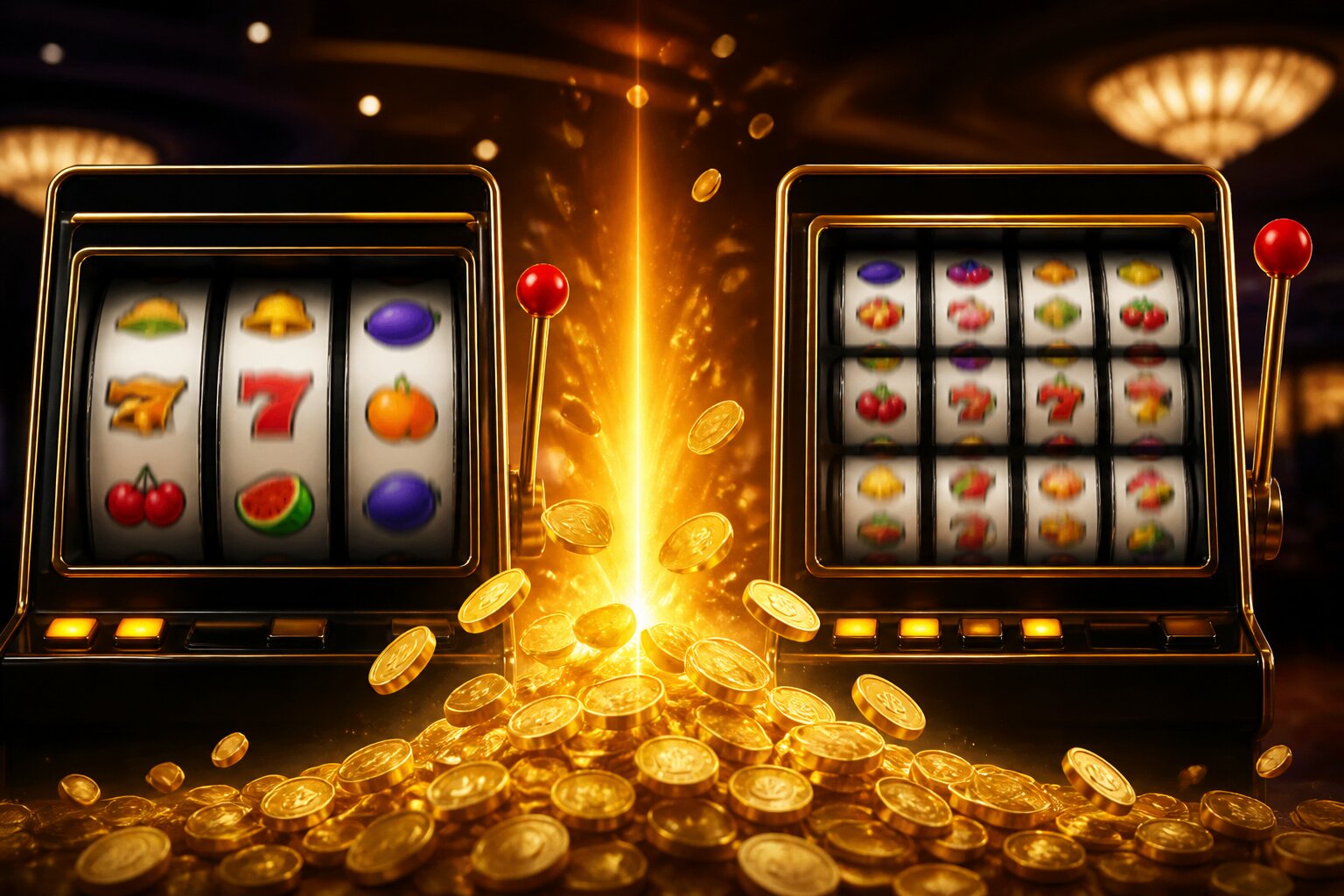
Ever wondered why some slots seem to hand out big wins more often while others keep their top prizes rare and distant? The difference usually lies in how the game is structured beneath the reels — and that structure affects how jackpots form and how often they can appear.
Traditional payline slots and “ways” slots offer contrasting paths to a win. One relies on set lines across the reels; the other opens up hundreds or thousands of symbol combinations on every spin. Understanding those mechanics makes it easier to compare jackpot potential and choose games that suit the kind of experience you want.
Below I break down those differences, how jackpots are calculated, and what to expect from frequency and volatility, using clear examples so you can see how it all fits together.
What Defines Traditional Slots vs Ways Slots?
Traditional slots use paylines: fixed lines that run across the reels, and matching symbols must land on those lines to form a win. You usually pick how many lines to bet on and set a stake per line, which affects how much a top-line payout is worth. This gives a straightforward, predictable structure where the paytable clearly lists combinations and payouts.
Ways slots remove the idea of paylines and instead pay for matching symbols appearing on adjacent reels, typically starting from the leftmost reel. A single total bet covers every possible “way” to win, and formats such as 243-ways or 1,000+ MegaWays create vast numbers of potential combinations on each spin. That wide net can increase the number of small-to-medium wins and create more opportunities for feature-triggering symbol clusters.
Both formats can coexist with fixed jackpots or progressive pools, but the way wins are formed — line-based versus position-based — is the key practical difference to keep in mind when you look at payout potential and game design. Next, we’ll see how that difference affects the actual jackpot sizes shown in paytables and progressive systems.
How Is Jackpot Size Calculated in Each Format?
In payline-based games, top payouts are usually defined in the paytable as fixed sums or as part of a progressive jackpot that grows with contributions from many players. Fixed jackpots are straightforward: the paytable lists the top prize for landing a full-line combination at the maximum stake. In progressive setups, a fraction of each bet feeds a shared pot that can reach very large values, though the jackpot size changes continuously and depends on the network of contributing games.
Ways slots calculate top potential in a similar twofold manner but with different icing on the cake. The huge number of winning combinations means large multi-symbol clusters and special feature rounds are more likely to drive big top prizes. Many ways games use mechanics such as cascading reels or multipliers chains in bonus rounds, which multiply wins beyond the static paytable figures. Some titles also include randomly triggered jackpot features or progressive elements; these use the same contribution principle as traditional progressives but can reach high totals through feature interactions.
Because both formats can carry fixed or progressive jackpots, the headline figure alone doesn’t tell the whole story: you also need to look at how the game’s mechanics — paylines versus ways, cascades, multipliers and bonus triggers — interact with those jackpot structures. That interaction feeds directly into how often large wins appear, which I cover next.
Jackpot Frequency & Volatility Explained
Jackpot frequency describes how often top prizes are paid, while volatility measures how large and variable the wins are. These concepts influence how a game feels over time and shape expectations about hitting substantial payouts.
Fixed-jackpot, payline slots are often designed with clearer, more modest top payouts and lower to medium volatility, so wins appear more regularly and balance between stake and return is steady. Progressive jackpots, attached to either format, are known for very low frequency: the pot may drop on any spin, but payouts are rare by design.
Ways slots commonly run at higher volatility. The combination of many win ways with mechanics like cascades and rising multipliers means that the biggest jackpots typically require long trigger chains or feature lucked triggers; as such, those top wins appear less often but can be considerably larger when they do. Given this unpredictability, setting a sensible stake and a firm bankroll limit helps keep play controlled and enjoyable.
Understanding volatility and frequency together gives a clearer picture of jackpot behaviour than any single headline payout figure. With that in mind, the next section looks at the bonus features and mechanics that produce those headline numbers.
Key Differences in Bonus Features & Mechanics
Payline slots tend to offer familiar, straightforward features that are easy to evaluate from the paytable. Free spins tied to scatter symbols, expanding or sticky wilds that improve the chance of filling paylines, and pick-me bonus rounds that award instant prizes are common. These features generally increase the frequency of smaller-to-medium wins or create clearly defined routes to a big fixed payout.
Ways-style games usually layer more dynamic mechanics on top of their wide win grids. Cascading reels remove winning symbols and replace them with new ones, creating the possibility of multiple wins from a single spin and feeding multipliers that grow during a bonus sequence. Mystery or transforming symbols can change the composition of the reels to produce unexpected clusters, and some titles allow bonus-buys to access feature rounds directly. Those mechanics amplify both the scale and the rarity of top prizes, as a sequence of favourable cascades or multiplier steps is often needed to reach the largest payouts.
Both formats sometimes borrow from each other: payline games can have cascades and multipliers, and ways games can include fixed-line-style bonus rounds. The crucial difference is that ways games tend to generate their largest wins through chained interactions rather than single-line hits, and that influences how you evaluate their advertised jackpot potential. Next, we compare those chances more directly.
Comparing Your Chances: Which Offers Bigger Payouts?
Both payline and ways slots can deliver substantial jackpots, but the likelihood and nature of those payouts differ with game architecture and volatility. RTP and jackpot size are useful guides, yet the route to a top prize — whether through a single payline or an extended cascade and multiplier sequence — is often the deciding factor.
How Likely Are Jackpots on Traditional Slots?
Payline slots usually show clear paytables and, where relevant, progressive eligibility rules. Typical RTPs range from the mid-90s to high-90s percentage points. Fixed-jackpot examples often list a top payout such as a several-hundred-times stake maximum for line hits; progressives can climb much higher but remain rare.
For progressive pots attached to payline games, headline sums can span from low five-figure totals to multi-million pools, depending on the network size. The odds of landing these are extremely low by design; large wins occur infrequently and are not guaranteed by play patterns.
How Likely Are Jackpots on Ways Slots?
Ways and MegaWays titles can advertise very high theoretical multipliers — sometimes in the thousands of times your stake — because of the combination of many win ways, cascades and multipliers. RTPs sit in a similar band to payline slots, but volatility is often higher, so top payouts are rarer while the theoretical ceiling is greater.
A game that offers, say, a 10,000x top payout will be statistically unlikely to hit on any given spin; those figures illustrate peak potential rather than expected outcomes. Jackpot triggers tied to bonus mechanics add another layer of rarity: the feature must not only occur, it must also run favourably through multiple cascades or multiplier stages to reach the highest advertised totals.
With the probabilities and mechanics laid out, the next section looks at common player experiences and persistent myths that cloud how people perceive these chances.
Real Player Experiences & Common Myths
Anecdotes of huge wins or “near-misses” are part of slot culture, but they don’t change how games operate. Outcomes are determined by each game’s random number generator (RNG), which ensures spins are independent events; past results don’t alter future ones.
Several myths persist:
- “Slots are due a win after a losing streak.” Spins are independent; prior sequences don’t increase the chance of a payout.
- “Bigger bets increase jackpot odds.” Bet size can affect payout scale and may be required for some progressives, but it usually does not change the underlying chance of a winning combination.
- “Switching games improves results.” Moving between titles does not influence RNG outcomes.
- “You can tell a ‘hot’ or ‘cold’ slot.” There’s no reliable way to distinguish past performance as an indicator of future results.
Debunking these ideas helps avoid chasing unfounded patterns. Managing stakes, being aware of volatility, and playing within set limits are practical ways to stay in control and enjoy the game experience without expectations shaped by myths.
The comparisons above should give a clear view of how jackpot potential differs between payline and ways slots, and how game mechanics and volatility shape what those headline numbers actually mean. Whether you prefer the steady clarity of payline titles or the high-ceiling excitement of ways games, knowing what drives the top prizes lets you choose more confidently and play within your own limits.
Play Online Slots at Late Casino
We invite you to enjoy the entertainment and excitement of playing online slots with us at Late Casino. Enjoy our welcoming atmosphere and see what makes our site a great place to have a fun experience.
Getting started is simple: just create an account, make a deposit and you can start playing whenever it suits you. We look forward to welcoming you.
**The information provided in this blog is intended for educational purposes and should not be construed as betting advice or a guarantee of success. Always gamble responsibly.