
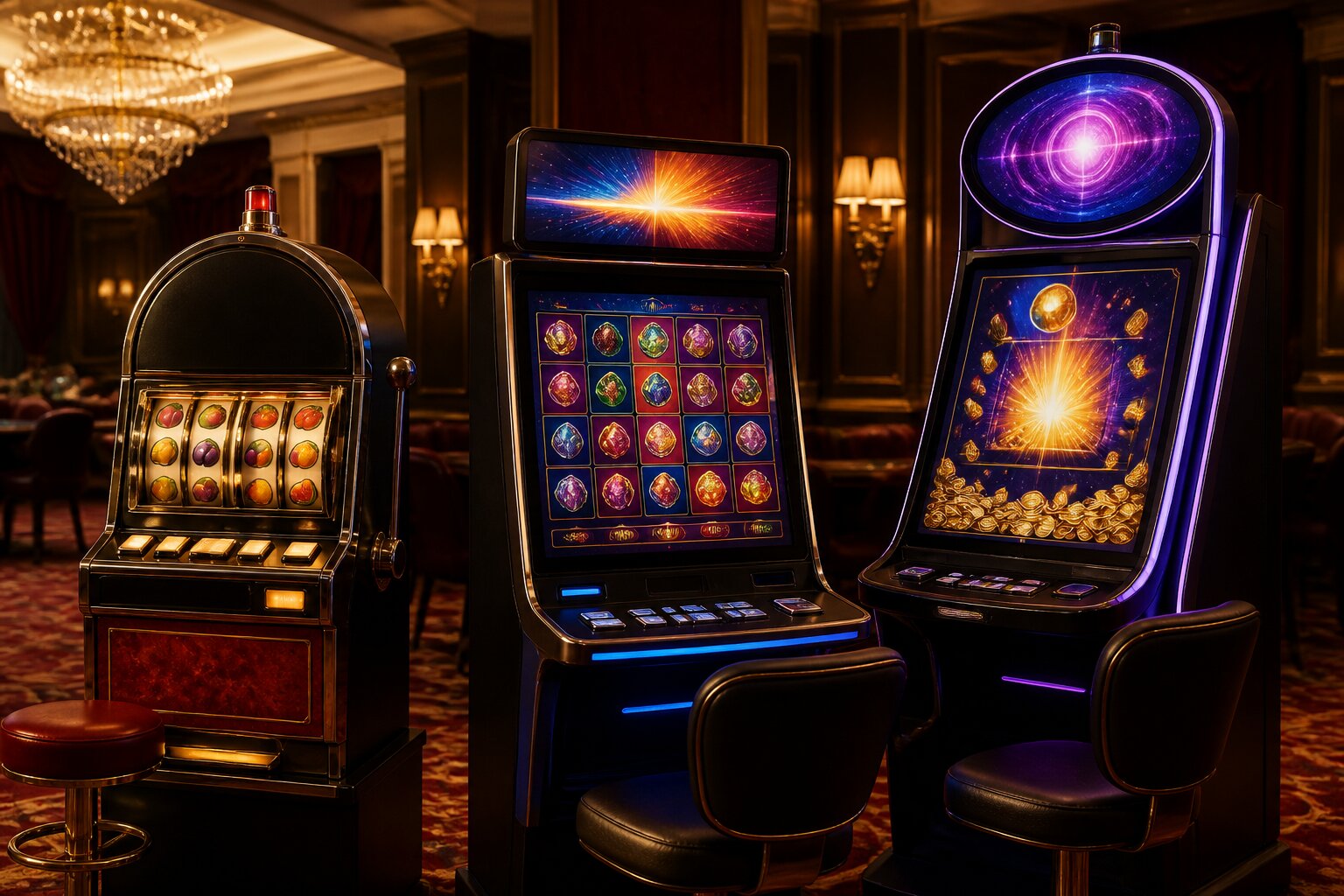
Slot machines are at the centre of any casino, whether you’re spinning reels online or dropping a pound into a pub fruit machine. With so many options, it can feel confusing to know which style suits you best.
Each type of slot offers a different pace and set of features — from simple three-reel games to cinematic video slots and progressives with growing jackpots. Read on and you’ll get clear, practical explanations that make choosing a game easier.
What Are The Main Types Of Slot Machines?
Slots broadly fall into three groups: classic, video and progressive. Understanding the differences helps you decide whether you want a straightforward play session, a feature-packed experience, or the chance to chase a very large jackpot.
Classic slots echo the earliest machines: three reels, a small number of paylines and familiar symbols such as fruit, bars and sevens. Video slots are the modern alternative, often featuring five or more reels, detailed themes, animations and bonus features. Progressive slots connect many bets into a single, rising jackpot that can reach substantial sums as it grows.
All legitimate machines use certified random number generators to determine outcomes. Only adults aged 18 or over should play, and it’s sensible to set limits before you start. Next, we’ll look at classic slots in more detail so you can see what their appeal is.
Classic Slot Machines Explained
Classic slots are built around simplicity. With three spinning reels and typically only one payline, the gameplay is direct: matching symbols on the central line produces the standard wins. Symbol sets draw on the history of these machines, with fruits, bells and bar icons providing instantly recognisable combinations.
Because they lack complex features, classic slots are often chosen by players who prefer short, predictable rounds and easy-to-understand odds. Wagers tend to be modest, and the gameplay rhythm is steady rather than hectic. Behind the scenes, outcomes are determined by random number generators, so results are statistically independent from one spin to the next.
Classic machines can be a comfortable way to learn how slot mechanics work before moving on to more feature-rich games. If you enjoy this straightforward format, the next section explains how video slots build on those basics with layers of features and storytelling.
Video Slot Machines: Features & Experience
Video slots expand the slot formula into a more cinematic format. They commonly use five or more reels and introduce multiple paylines, so there are many ways to form winning combinations. Themes range widely — historical settings, film-inspired plots, mythology and more — and developers use graphics, animations and music to support those themes.
What sets video slots apart are the extra mechanics. Wild symbols substitute for others to complete combinations; scatter symbols may trigger free-spin modes; and bonus rounds can open mini-games with alternative prize opportunities. Some games incorporate progressive storylines or character development, giving players a sense of progression beyond single spins.
Despite their complexity, the underlying outcome generation remains electronic and random, with certified testing to confirm fairness. Video slots offer greater variety in volatility and potential payouts than classic machines, making them suitable for players who enjoy more interaction. Up next, we’ll look at how progressive jackpots introduce another dimension to the slot landscape.
How Do Progressive Slot Machines Work?
Progressive slots link a portion of each stake into a shared jackpot fund that grows until one play meets the criteria to award it. That growth can come from machines in a single venue or from games linked across multiple sites; wider networks let the jackpot rise faster and reach much larger figures.
Most progressives keep a set of rules determining how the top prize is won — a specific symbol combination, a bonus wheel outcome, or a randomly triggered award. After the jackpot is paid, it resets to a base amount and begins building again. Because the chance of hitting the top prize is very small, these games are best viewed as long‑shot possibilities with intermittent high-profile wins rather than predictable returns.
Normal payouts on progressive games follow the same mechanics as other video slots, and outcomes are governed by certified random number generation. With that context in mind, the next section compares these types side by side so you can weigh which features matter most to you.
Key Differences Between Classic, Video & Progressive Slots
Although every slot revolves around spinning reels and matching symbols, their differences influence play style, pacing and potential rewards. These distinctions affect how players experience sessions, how quickly wins occur, and what kinds of features are available, without changing the underlying principle that outcomes are random and determined by the game’s software.
Symbols & Reels
Classic machines use a limited symbol set and fewer reels, keeping combinations simple and immediate. The reduced complexity makes them easy to read at a glance and well suited to players who prefer a straightforward, fast-paced rhythm.
Video slots expand the symbol library to include themed icons, stacked symbols and animated features across more reels. This provides more ways to win on any given spin and allows designers to build narrative and visual interest through extra symbol types and payline structures.
Progressive titles usually share the visual and mechanical richness of video slots, but include one or more symbols or screens dedicated to the jackpot mechanic. The progressive element sits alongside regular reel play, offering the possibility of much larger prizes while base game mechanics remain comparable to other video slots.
Bonus Rounds & Payouts
Classic slots rarely include extra features; wins are resolved directly from the reels. Payouts tend to be straightforward and predictable within the context of the game’s declared paytable and volatility level.
Video slots introduce variety through free spins, pick-and-win rounds, and modifiers that can alter payouts for a short period. These extras add tactical variety and can change the effective risk and reward pattern of a session, while still operating under the same random number generation and return-to-player parameters.
Progressive slots may embed distinct bonus segments specifically for the jackpot, while base game payouts remain comparable to other video titles. The jackpot bonus is often separate from normal spins and can require specific symbol combinations or triggers, so the chance of winning the progressive prize is typically much lower than ordinary payouts.
Visuals & Sound Effects
The visual and audio presentation is a clear divider: classic games favour simple, functional displays and modest sound, whereas video and progressive slots invest in detailed graphics, animated sequences and soundtrack design to heighten engagement and signal important moments. These enhancements serve to clarify gameplay events and make bonus activations feel significant, but they do not affect the fairness or randomness of outcomes.
With those contrasts in mind, the following section explains how the online environment changes the way these different formats are played. Online platforms allow for quicker access to a wider range of titles, and often include additional information such as paytables, volatility indicators and game history that help players make informed choices. Digital play also means game updates, tournaments and promotional features can be introduced more easily, while licensing and regulation require transparent display of game rules and responsible gambling tools.
Are Online Slot Machines Different From Land-Based Ones?
The core mechanics are the same whether a slot is online or on a casino floor, but the delivery differs in ways that affect choice and convenience. Online slots can offer hundreds or thousands of individual titles, unconstrained by physical cabinet size, so developers experiment more with themes, reel structures and bonus mechanics. The result is often games with higher production values and a broader range of volatility.
Land-based machines provide a physical presence: buttons, cabinets and the sensory backdrop of a gaming floor, which some players prefer for the social atmosphere. Payout structures and random number generation undergo regulatory checks in both formats, ensuring comparable fairness.
Accessibility and variety make online play appealing for exploration, while live venues deliver a different kind of experience. Next, we’ll address common misconceptions so you can separate facts from unfounded ideas about slots.
Common Myths About Slot Machine Types
Several persistent myths cloud public understanding of slots. One widespread notion is that a machine can be “due” to pay after a run of losses; in reality, electronic outcome generation treats each spin as an isolated event, so previous results do not change the odds going forward.
Claims that particular techniques or timing can guarantee a win are also unfounded. No strategy can alter the programmed probabilities of symbols or bonus triggers. Likewise, moving between classic and video machines does not affect underlying outcome generation — the differences lie in features, not fairness.
Clearing up these misconceptions helps set realistic expectations, which in turn makes it easier to choose a game that fits your interests. With that perspective, the final section helps you narrow your options based on what you find most enjoyable.
Choosing The Right Slot Machine For You
Choosing a slot comes down to personal preference and how you want to spend your session. If you favour short, predictable rounds with simple wins, classic slots are a natural fit. If you enjoy immersive themes and varied mechanics, video slots offer a broader experience. If the appeal is the possibility of a large jackpot, progressives provide that feature, while accepting that the top prize is rare.
Consider how much time and money you want to commit, and the level of volatility you’re comfortable with: lower volatility gives more frequent small wins, higher volatility can offer larger, less frequent payouts. Set limits on both spending and time before you start, and stick to them to keep the activity enjoyable.
Only adults aged 18 or over should play slot machines. Choosing the right type means balancing what entertains you with sensible boundaries, and that balance is what makes the game worthwhile in the long run.
**The information provided in this blog is intended for educational purposes and should not be construed as betting advice or a guarantee of success. Always gamble responsibly.