
If you’re new to blackjack or want a clearer explanation of table terms, understanding a “push” is a good place to start. It’s a simple idea, but it affects how each hand settles and what happens to your stake.
This article explains what a push is, how it compares to wins and losses, where it appears, and what you should expect when it happens. Read on to get a straightforward picture of the outcome and how it fits into normal play.
What Is a Push in Blackjack?
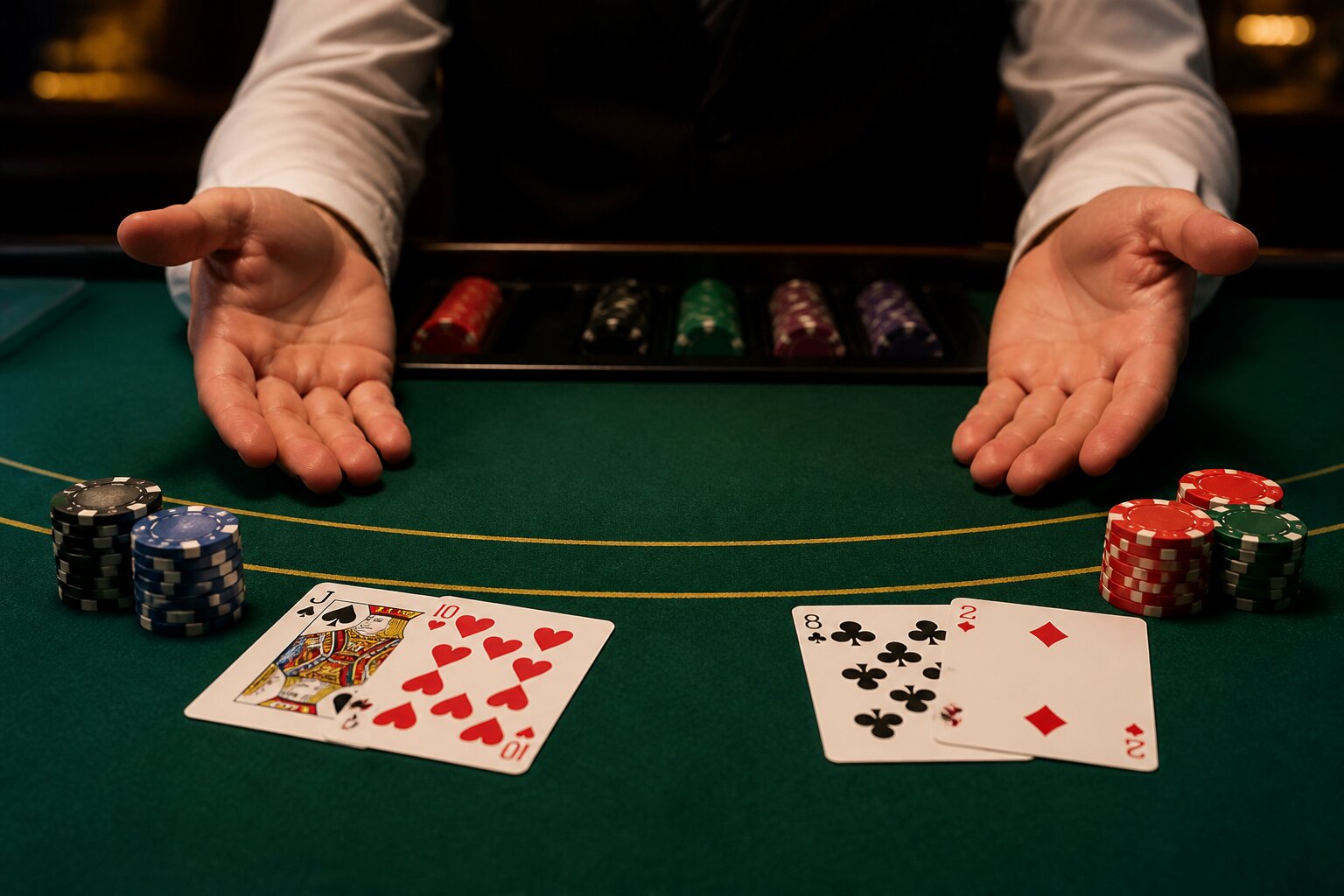
A push in blackjack occurs when your final hand total equals the dealer’s total. In other words, the round ends in a tie.
When that happens, you neither win nor lose. The money you staked is returned to you and the hand is closed. That returned stake is the key difference from winning, where you receive a payout beyond your original bet, and from losing, where your stake is taken by the house.
Pushes most commonly arise when both you and the dealer stand on the same total without either going over 21, including cases where both hands are blackjack.
How Does a Push Affect Blackjack Game Outcomes?
A push simply restores your stake, leaving your overall balance unchanged for that hand. It does not produce winnings, nor does it reduce your balance as a loss would.
This outcome is applied automatically at the end of the round, whether at a live table or in an online game. Knowing this helps you set expectations for how frequently your bankroll will change and how individual hands affect your session.
If you want to reflect on strategy after a push, consider how your decisions earlier in the hand led to the tie, and whether you should adapt your approach for future hands.
Common Situations Where a Push Occurs
Pushes happen whenever the player and dealer finish with exactly the same total. Typical examples include:
- Both player and dealer end with 18 after play concludes.
- Both player and dealer are dealt blackjack as their first two cards.
- Both stand on identical totals such as 20 or 21 without either going bust.
- A player splits and one resulting hand matches the dealer’s final total.
These situations are most likely when both sides follow conservative play or when the initial hands naturally mirror each other.
Pushes can also be influenced by specific table rules and by decisions you make during the hand. For example, standing often leads to more pushes than hitting, and splitting or doubling can create more opportunities for totals to align.
Observing how pushes arise can be helpful when thinking about risk and reward in your play style. It is useful to consider how your usual choices affect the chance of a push and whether reducing ties fits your overall strategy.
What Happens to Your Bet After a Push?
When a push occurs, the dealer returns your original stake and the hand is settled with no further payment. The returned amount is available to use immediately in subsequent rounds, so you can choose to continue playing without delay.
This immediate settlement can be useful for planning your next move. Some players use a push as a natural point to pause and think about their strategy, while others see it as an opportunity to make small adjustments to their betting.
Common sensible responses to a push include:
- reassessing your remaining bankroll and whether you want to change your bet size
- taking a short break to avoid making impulsive decisions
- reviewing recent outcomes to check if your approach is working as intended
It is sensible to keep track of outcomes over time so you understand how often pushes are affecting your returns, and to manage betting within limits you are comfortable with. If you find pushes are causing frustration or encouraging riskier bets, consider stepping away or seeking help with safer gambling practices.
Push vs Win vs Loss: Key Differences
A push is a tie that returns your stake. A win gives you both your stake and a payout according to the game’s rules. A loss removes your stake because your hand was lower than the dealer’s or you exceeded 21.
Each result is settled at the end of the round. Wins and losses directly change your bankroll, whereas pushes leave it as it was before the hand. Knowing these distinctions helps clarify how individual rounds contribute to your overall session balance.
Now that you see how outcomes differ, the next section looks at how players generally view pushes and the misconceptions that can surround them.
Are Pushes Good or Bad for Blackjack Players?
A push is neutral by design. It neither improves nor harms your bankroll for that particular hand, so labelling it good or bad misses the point. Instead, view a push as an opportunity to reassess.
Some players find that frequent pushes slow down momentum, while others appreciate the break from wins and losses. The important part is to keep a clear perspective on how pushes fit into the broader pattern of results during play.
If you notice pushes occurring regularly in similar situations, it can be worth examining your choices during those hands to see whether a different approach might reduce ties or increase winning chances.
Popular Myths About Pushes in Blackjack
There are a few persistent myths about pushes. One is that pushes somehow compensate for losses. In truth, a push simply returns your stake and has no compensatory effect on earlier defeats.
Another myth is that pushes favour one side over the other. A tie is neutral by definition; both player and dealer walk away unchanged for that hand.
Understanding these myths helps maintain realistic expectations and prevents players from reading too much into a single tied outcome.
How Casinos Handle Pushes at the Table
When a push is declared, the dealer or the game interface returns your stake and records the hand as a tie. In a live casino, you will see chips moved back to you. In an online game, the balance is updated immediately.
This process is standard across venues and does not involve additional paperwork or special conditions. Clear settlement procedures are part of fair play, and they make it straightforward to interpret your session history.
If you keep session records, pushes will show up as neutral outcomes. That clarity makes it easier to review how different hands affected your overall results.
Where Else Might the Term "Push" Be Used in Gambling?
The term push appears outside blackjack in contexts where bets result in neither a win nor a loss, and the stake is returned. The meaning is consistent across different forms of wagering.
Sports Betting
In sports betting a push happens when the final result exactly matches the bookmaker’s set margin or total. For example, a bet on a points total that finishes exactly on the predicted line will be refunded.
This usage shows how the idea of a tie carries over to other markets where outcomes can match predefined targets.
Other Casino Games
Some card and table games use similar terminology when outcomes are even and stakes are returned. The essential point is the same: no winner, no loser, and the original stake comes back to the bettor.
Across different games, recognising a push helps you understand settlement and keeps your expectations realistic about how each wager will be resolved.
Keep these distinctions in mind when you play, and always have a clear plan for bankroll management. If at any point gambling stops being enjoyable, step back and use available tools to help manage play.
**The information provided in this blog is intended for educational purposes and should not be construed as betting advice or a guarantee of success. Always gamble responsibly.