
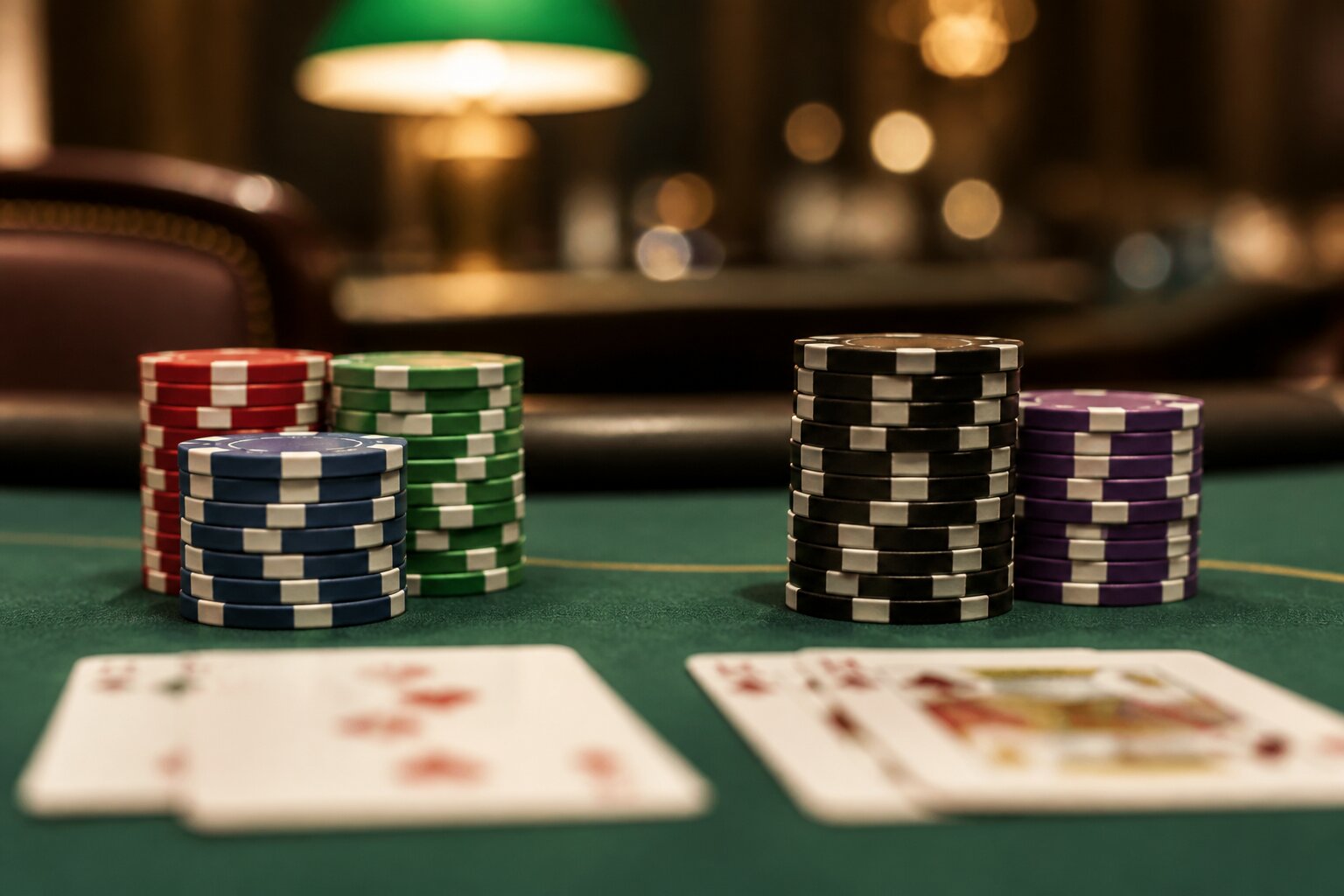
Choosing between 3 Card Poker and blackjack at the casino table can be a tricky decision. Both games offer entertainment and different ways to approach each hand, but they differ markedly in pace, decisions and overall odds.
Are you after fast rounds with a single key choice, or do you prefer a game where each decision changes the outcome? Read on to see how rules, payouts and house advantage compare — the next sections break each area down so you can pick the game that suits you best.
What Are the Basic Rules of 3 Card Poker and Blackjack?
3 Card Poker is a compact poker variant played against the dealer. Each player and the dealer receive three cards; the objective is to make the best three-card hand. Play starts with an initial stake, after which players decide whether to continue by matching their ante or to fold and forfeit that initial bet. The dealer must have a qualifying hand — commonly at least a Queen high — to compete; if the dealer fails to qualify some bets are returned and the ante pays out automatically.
Blackjack, often called 21, uses one or more standard decks and is played with the aim of getting a card total as close to 21 as possible without exceeding it. Players receive two cards and then choose whether to take further cards or stand. If a player’s total exceeds 21, that hand is lost immediately. The dealer acts last and follows fixed rules for drawing cards, which removes discretionary choices for the dealer and creates a different tactical landscape for players. These core rules set the stage for contrasting styles of play, which we’ll compare next.
How Do the Gameplays Differ?
Both games deliver distinct table experiences. The choice between them depends on whether you prefer quick resolution or layered decision-making during a hand, and on how much interaction and strategy you want from a single round.
Objective and Structure of Each Game
3 Card Poker’s structure is compact: you make one decision after seeing your initial three cards — to stay in or fold. That simplicity makes rounds very quick, with most of the action decided as soon as hands are revealed. Because there are fewer decisions to make, sessions can move at a brisk pace, which suits players who favour fast turnover and straightforward rules.
Blackjack unfolds more gradually. After the initial deal, players can take cards one at a time, weigh risks and adjust choices based on the dealer’s visible card. That ongoing decision-making means a single hand can require a sequence of tactical calls rather than a single judgement. The pacing of Blackjack allows for more adaptation during play, and players can use established basic strategies to shape their choices as the hand develops.
Dealer Interaction and Decision-Making
In 3 Card Poker the interaction is minimal; the outcome hinges on the relative strength of your hand versus the dealer’s, and whether the dealer qualifies. Because the dealer’s role is largely fixed, the player’s primary task is making that single fold or play decision and then seeing how the hands compare.
In Blackjack, players react to more information during the hand and must balance the risk of busting against the need to beat the dealer’s total. This creates a strategic element absent from the faster, simpler flow of 3 Card Poker. Decisions such as hitting, standing, splitting or doubling down introduce a layer of tactical depth and varying risk exposure. Understanding these differences helps when deciding which style of play suits your session — next, we’ll look at how payouts reflect those styles.
Which Game Offers Better Payouts?
Payouts vary by bet type and the specific rules in play, and optional side bets change the risk and reward picture considerably. What a player actually receives depends on which wager they place, the table rules in effect and whether bonus options are available. Below is how each game typically pays out and what that means for players in practical terms.
Typical Payout Structures Explained
In 3 Card Poker, winning the ante and play bets generally returns even money, often shown as 1:1. In addition to these main bets, separate bonus payouts exist for strong hands such as a straight, three of a kind or straight flush. These bonus amounts are fixed according to a paytable and are paid regardless of the dealer’s outcome, so they depend only on the cards you hold rather than any comparison with the dealer.
Blackjack pays 1:1 on standard wins for most hands. A player’s initial two-card Blackjack, which is an Ace plus a 10-value card, usually pays 3:2, meaning £3 for every £2 wagered. If both player and dealer have Blackjack at the same time the hand is a push and the original stake is returned. Table rules can alter payouts and these small differences can change the overall expected return, so it is sensible to check the specific conditions before you play.
Bonus Bets and Side Options Compared
3 Card Poker can include side bets such as Pair Plus, where payouts depend only on your own hand and can be sizeable for rare combinations. Because these bets only look at the player’s cards, they remove the element of dealer comparison but typically pay more for the less common outcomes.
Blackjack offers side bets such as Perfect Pairs or 21 plus 3, which reward particular card patterns or combinations. While these side bets can show higher headline payouts, they typically carry a much larger house edge than the main wagers, reflecting the lower probability of success. Deciding whether to use them comes down to personal tolerance for higher variance and a clear understanding that the long-term expected return is usually lower than on the standard bets.
What Are the Odds of Winning in Each Game?
Understanding typical probabilities and how decision-making affects results will help set realistic expectations for each session.
Player Odds in 3 Card Poker
On any single round of 3 Card Poker, the player’s chance of finishing with a better hand than the dealer is just under 45% under standard rules. Since the dealer must qualify to contest some bets, outcomes can shift slightly when the dealer fails to meet the qualifying threshold. The house edge on the combined ante and play bets is commonly around 3.4%, while side bets such as Pair Plus often show markedly higher edges, frequently around 7% or more.
Player Odds in Blackjack
Blackjack tends to present stronger player odds, particularly when basic strategy is used to inform choices. Depending on deck count and rule variations, a player using statistically informed decisions can reduce the house edge to around 0.5% in the most favourable setups; typical play without perfect strategy sees higher edges. The player’s probability of beating the dealer or pushing sits close to 49% in many standard rule sets, but this fluctuates with rules and player decisions.
Both games are governed by random card outcomes, so understanding these statistical envelopes rather than expecting predictable streaks is the best way to approach either table. With odds in mind, the next section explains how the house edge is calculated and what it means for long-term play.
Understanding the House Edge: 3 Card Poker vs Blackjack
The house edge quantifies the casino’s expected long-term advantage on a given bet. It’s an average figure calculated over many hands and does not predict short-term results.
For 3 Card Poker, the main ante and play bets typically produce a house edge near 3.4% under common paytables. Side bets increase the edge considerably because their higher payouts are balanced by much lower win frequencies.
Blackjack normally offers one of the smallest house edges among casino games, often between 0.5% and 2% depending on rules and player choices. Rule features that raise the house edge include using more decks, paying 6:5 or worse on Blackjack, restricting doubling options, or introducing continuous shuffled shoes. Even when the edge is low, it remains a long‑run expectation rather than a guarantee for any single sitting.
Keeping the house edge in mind can inform which game and which bets to favour during a session. If you want to know how fairness is independently verified, the following section looks at common checks and misconceptions.
Common Misconceptions About Game Fairness
A frequent worry is that casinos manipulate hands to influence winners; licensed operators must adhere to strict regulatory standards that prevent that sort of interference. Independent testing laboratories assess both live and electronic games to confirm that outcomes are generated fairly and in accordance with published rules. For online play, certified Random Number Generators produce unbiased results that are audited on a regular basis.
Another misconception is that past patterns can be used to forecast future outcomes. Because each deal or shuffle is statistically independent, previous results do not change the likelihood of future hands. Clear rules and published house edges establish expected returns over time, and reputable operators provide transparent information about game mechanics and complaint procedures. With confidence in fairness established, the final section helps choose between the two games based on player preference and practical considerations.
Which Game Should You Choose?
The best choice depends on how you like to play. 3 Card Poker suits players who prefer brisk rounds and a simple decision process, plus the occasional chance of a big bonus payout from side bets. Blackjack appeals to those who enjoy ongoing decisions during a hand and want the chance to reduce the house edge through careful play.
Consider session length, your comfort with risk, and whether you prefer steady, strategic involvement or quicker, higher‑variance rounds. Setting a budget and sticking to it will protect both your finances and your enjoyment of the experience. If gambling ever stops being enjoyable or causes concern, confidential help is available from organisations such as BeGambleAware.org. Play within your limits and treat casino games as entertainment rather than a way to make money.
Whichever table you choose, a clear sense of the rules, payouts and house edge will help you make the most of your time while keeping play responsible and informed.
**The information provided in this blog is intended for educational purposes and should not be construed as betting advice or a guarantee of success. Always gamble responsibly.