
Ever wanted to enjoy a game of poker but found yourself without any chips? It happens to all of us, and the good news is you don’t need a fancy set to have a proper game. With a little imagination, ordinary household items can stand in for chips and keep the action moving.
This guide shows simple, practical alternatives and ways to run a smooth chip-free night. Read on for ideas that suit a casual get-together, a travel game, or a different kind of poker evening that still feels fair and entertaining.
What Can You Use Instead of Chips in Poker?
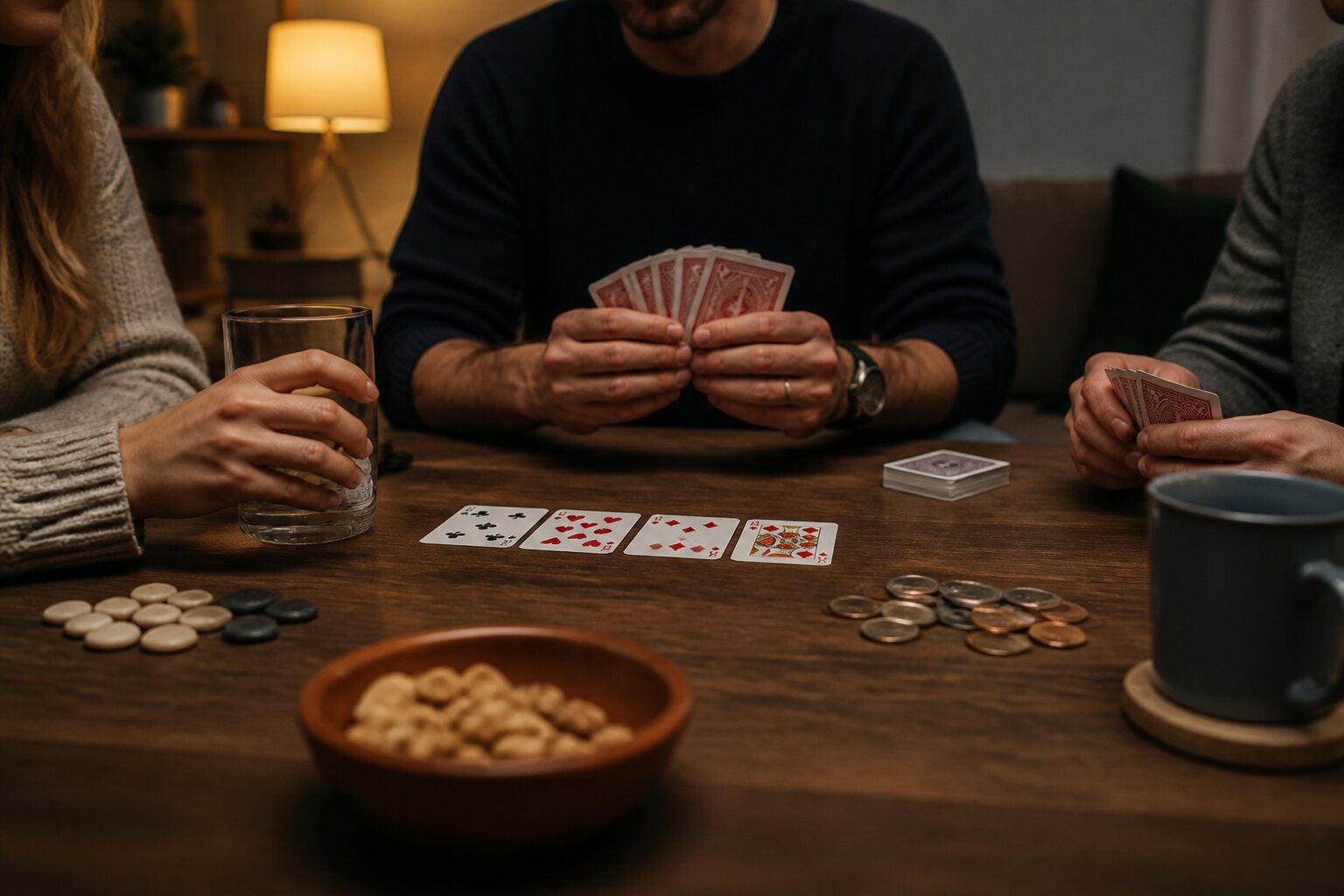
You don’t need official poker chips to play. Most homes already have items that work well as betting tokens — you only need to agree their values before you start.
- Coins are the obvious choice: pennies, two pence or five pence pieces are easy to count and familiar to everyone.
- Sweets, like wrapped chocolates or small candies, double as treats and bets; they’re best for very casual games.
- Buttons or beads bring colour and are simple to sort into stacks for different values.
- Matchsticks or toothpicks divide neatly so you can count amounts quickly.
- Paper slips allow full customisation: cut them into pieces and write denominations on them.
- Game tokens from board games are another ready-made option if you have them to hand.
Decide what each item represents so everyone plays with the same expectations. That clarity keeps rounds moving and helps avoid disputes over stakes.
Creative Items for Poker Betting at Home
If you want to add personality to your game, a few unconventional items can make betting more memorable. Bottle caps, for example, are lightweight and colourful; different colours can be assigned different values. Lego bricks work well because physical size or colour can stand in for denomination, and they stack neatly into visible piles.
Kitchen cupboards hold a surprising variety of options. Dried pasta shapes such as penne or fusilli are easy to count and unlikely to roll away, while clothes pegs can be clipped to cards or placed as visible markers for bets. Puzzle pieces from an old set give each player a unique token, and beads — loose or on a short string — create tidy, recognisable stacks.
These playful substitutes keep the evening relaxed. Make sure everyone joining is an adult and that the game stays recreational rather than commercial; keeping stakes modest preserves the social spirit.
How Does Poker Work Without Traditional Chips?
The mechanics of poker don’t change when you replace chips with household items. The core requirement is a shared understanding of values and clear visibility of the pot and each player’s stake.
Before play begins, the group agrees on what each substitute represents and how bets will be made. For instance, if using buttons and beads, one colour of button might equal five beads, or a small coin could count as ten of a certain item — whatever system makes sense for your group. During rounds, players place their tokens into the central pot to represent calls and raises. If it helps, keep a central pile that everyone can see; transparency reduces confusion.
If you want an example: in a Texas Hold’em round using sweets and coins, you might set 1 coin = 5 sweets. A player who wants to raise places the appropriate mix of coins and sweets into the pot, and others match that value according to the agreed conversion. That same approach applies to any variant you choose.
Make sure the rules for values and betting are clear at the outset and revisited if someone suggests changing them mid-game. Keeping communication open preserves the fun and keeps the game moving at a steady pace.
Popular Poker Variations for Chip-Free Play
Many familiar poker variants translate neatly to a chip-free setting, each offering a different rhythm and social feel.
Texas Hold’em remains a strong choice when you want clear structure and community cards that create shared tension. With household tokens, the betting rounds — pre-flop, flop, turn and river — proceed the same way as they would with chips, and the visible pot keeps everyone on the same page.
Five Card Draw is well suited to smaller groups and short sessions. Because each player holds a complete hand and there’s a single draw phase, betting tends to be straightforward and social, which makes it ideal for a casual evening.
Pineapple Poker introduces an extra decision early on: each player starts with three cards and must discard one before the betting begins, so it injects an extra strategic twist without complicating the betting mechanics.
Dealer’s Choice keeps the table lively: the player on dealer duty selects the variant for that round, which can encourage variety and let people introduce favourite house rules. Whichever variant you pick, the token-based betting model remains the same — only the timing and structure of betting rounds differ.
Organising a Fun Poker Night Without Chips
A successful chip-free poker night depends on planning a few simple details so the atmosphere stays friendly and the rules are understood.
Begin by agreeing which substitutes will be used and how they map to values. A designated central area for the pot helps everyone follow the totals and keeps the table tidy. Appointing one person to keep a quick tally on a notepad is useful when tokens are mixed or swapped between rounds; this avoids accidental confusion over who has what.
Setting low, agreed limits keeps the game comfortable for all players and prevents any single person from feeling pressured. Encourage short breaks between sections of play so people can stretch, chat and reset their expectations. These pauses make the evening more social and less intense.
If a dispute arises, return to the house rules you established at the start; a calm, collective decision keeps the game moving and preserves the friendly tone.
Practical Tips for Managing Bets and Pots
Manage the practical details so the betting stays clear and simple. Agree the values early so every player understands the exchange rate between different tokens. Place all bets into a clearly visible central pot so no one needs to guess the total. If you’re using a mix of items, keep them separated into small piles by denomination so they’re easy to count.
Adding a notepad to record who has which items is especially helpful when you swap tokens between hands or when someone joins or leaves the table. Keep stakes low and consistent — this avoids awkward moments and keeps the game light-hearted. Finally, regular pauses let players check in and ensure everyone is still happy with how the evening is running.
Stick to these practices and your chip-free poker night will stay organised, fair and enjoyable.
Final Thoughts
Playing poker without chips is a practical and often charming alternative that opens the game up to more spontaneous settings and creative play. With clear values, a visible pot and a few simple ground rules, you can enjoy familiar poker variants using everyday items and keep the evening focused on friendly competition and conversation. If you’re hosting, set expectations early and keep stakes modest, and you’ll have a smooth, memorable game night that wraps up neatly and leaves everyone satisfied.
**The information provided in this blog is intended for educational purposes and should not be construed as betting advice or a guarantee of success. Always gamble responsibly.