
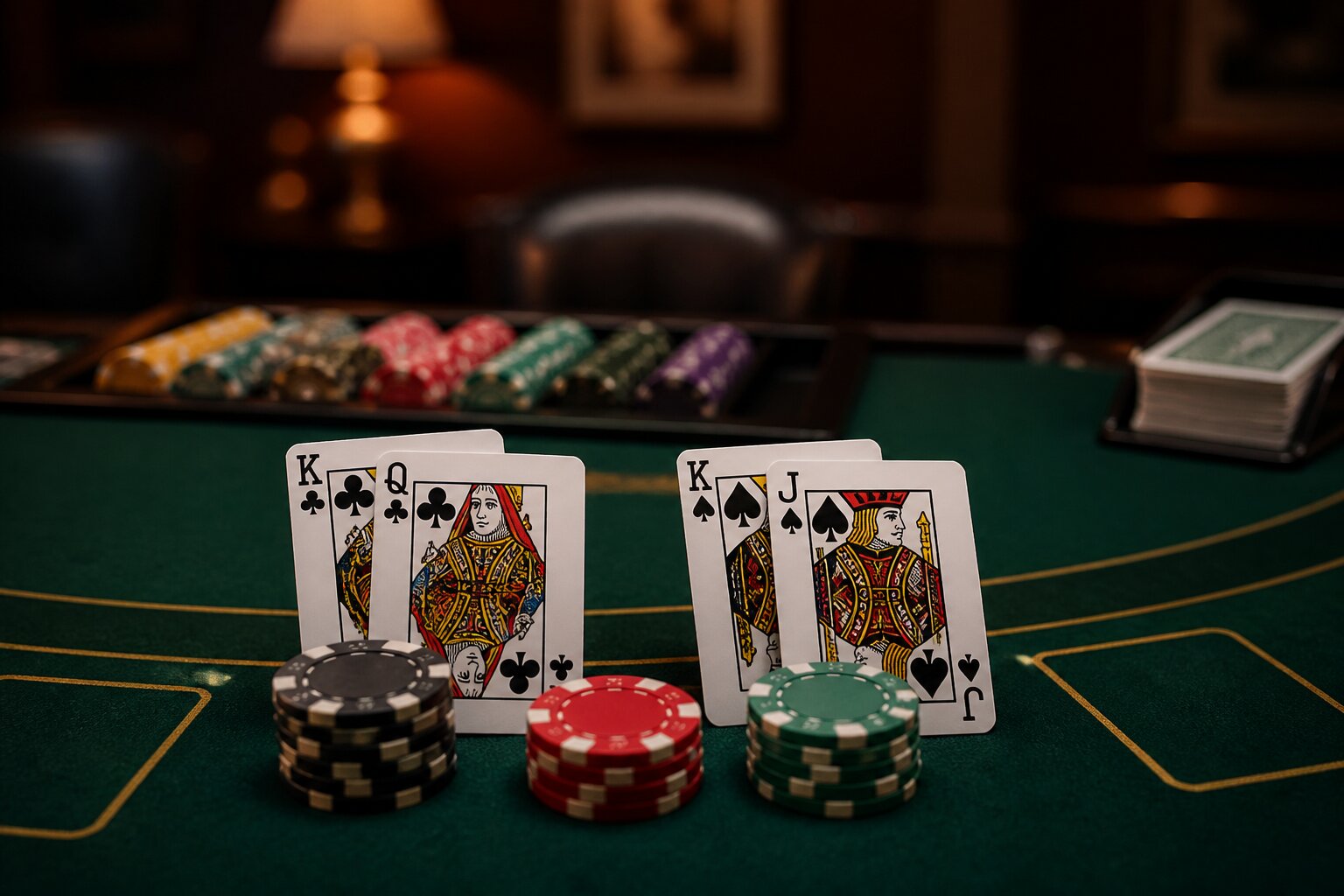
Blackjack appeals to players who enjoy quick decisions and clear rules. Many tables also offer optional side bets that introduce different ways to win and change the flavour of a session.
This article explains what suited trips are, how the 21+3 side bet uses them, and what you should know about payouts and odds so you can decide whether this extra wager suits your style.
What Are Suited Trips in Blackjack?
Suited trips refers to a specific three-card combination made from a player’s two initial cards plus the dealer’s upcard, where all three cards share the same rank and the same suit. For instance, three Kings of Diamonds on the table at once would be suited trips.
Suited trips are not part of the main blackjack hand and do not affect the game’s usual objective of reaching 21 or beating the dealer. Their only relevance is when a player has placed the 21+3 side bet before the deal. If the two player cards and the dealer’s upcard form suited trips, that side bet pays the top prize on its paytable.
Because suited trips require a precise match of rank and suit, they are much rarer than other three-card results. That rarity is the reason suited trips typically carry the largest payout among 21+3 outcomes. Next, we’ll look at how the 21+3 side bet turns those three cards into a poker-style payout structure.
How Does the 21+3 Side Bet Work?
The 21+3 side bet is an optional wager placed in addition to the main blackjack stake before any cards are dealt. It evaluates the three-card combination formed by the player’s first two cards and the dealer’s upcard in a way similar to three-card poker.
Once the initial cards are revealed, the dealer or game software compares the three cards to the side bet’s paytable. Typical winning combinations are, from most to least valuable: suited trips, straight flush, three of a kind, straight, and flush. Each of these hands has its own payout level as shown on the table’s paytable.
If the three cards do not match any winning pattern, the side bet is lost while the main blackjack hand proceeds independently. Because the side bet is settled immediately after the deal, subsequent player actions have no effect on its outcome. With that process clear, the next section examines the specific payouts and how they relate to probability.
Payouts and Odds for Suited Trips
Suited trips usually represent the highest payout on a 21+3 paytable. A common payout is 100 to 1, which means a £1 side bet would return £100 plus the stake when suited trips occur.
Other hands on the paytable pay less, often ranging from about 5 to 40 to 1 depending on the exact hand and the casino’s paytable. The relative values reflect how often each hand appears: the rarer the hand, the higher the payout.
In terms of probability, suited trips are extremely unlikely. With multi-deck shoes commonly used in casino blackjack, the chance of suited trips is typically around 0.02% — roughly one occurrence in 5,000 initial deals. That steep mismatch between payout and frequency explains why the house edge on the 21+3 bet is generally higher than for the main blackjack game. Understanding these figures helps to decide whether the occasional large payout justifies the extra cost of the side bet. The following section explains exactly when a suited trips result is recognised and paid.
When Are Suited Trips Paid Out?
Any 21+3 side bet is settled immediately after the initial three relevant cards are dealt. The dealer checks the player’s two cards and the dealer’s upcard and identifies whether those cards form any winning combination on the paytable.
If they form suited trips, the payout is calculated and paid at that moment, separately from the main hand. Whether the player subsequently wins or loses the main blackjack hand has no bearing on that side bet settlement. After the side bet is resolved, the main round continues as normal. With timing and settlement covered, it helps to compare suited trips with other three-card hands to see what makes them special.
What Makes Suited Trips Different from Other Blackjack Hands?
Suited trips are distinguished by their strict requirement that all three cards match both in rank and in suit. Other three-card outcomes relax one or both of those conditions: three of a kind needs matching rank but allows any suits, while a flush requires matching suits without regard to rank. Straight and straight flush outcomes depend on card sequence as well as suit in the case of a straight flush.
Because suited trips combine rank and suit matching, they are rarer than any of those alternatives, which is why they sit at the top of most 21+3 paytables. They are also independent of traditional blackjack objectives; suited trips merely reference a narrow set of cards at the start of the round and do not influence the strategy or result of the primary hand. Next, we answer a couple of common questions that come up when players first learn about suited trips.
Common Questions About Suited Trips
Players commonly ask about how rare suited trips are and where they can play for them. Here are concise answers that clarify those points.
How Rare Are Suited Trips?
Suited trips occur very infrequently. In multi-deck blackjack games they usually appear at about a 0.02% rate, which equates to roughly one suited trips result in 5,000 initial deals. That rarity helps explain why the payout for suited trips is comparatively large.
Because the event is so uncommon, it is important to understand that suited trips are a high variance outcome. Players should expect long stretches without a win on the 21+3 side bet, and factor that into how they manage their session and bankroll.
Are Suited Trips Only Available at Certain Casinos?
The 21+3 side bet — and therefore suited trips — is not present at every blackjack table. Its availability depends on the game variant and the operator’s offered side bets. When present, paytables can vary, so players should check the posted paytable before placing the side bet.
Different paytables change the overall expected return of the side bet, so even when 21+3 is available the value to the player can differ. With availability and rarity explained, the final section weighs the practical advantages and disadvantages of adding a 21+3 wager to a session.
Pros and Cons of the 21+3 Side Bet
Below are the main benefits and drawbacks to consider when deciding whether the 21+3 side bet fits your play.
Pros
Placing the 21+3 bet can lead to significantly larger, occasional payouts than those from the main blackjack hand, especially if suited trips or straight flushes appear. The bet is straightforward to place and does not require altering your blackjack play, since it only depends on the initial three cards. For players who enjoy a separate, higher-variance opportunity within a hand, the side bet adds that option without complicating the core game.
Cons
The top payouts are offset by very long odds for those outcomes, which makes the side bet a high-variance option with a higher house edge than regular blackjack. Because paytables differ between games, the expected return can vary, so the value of the side bet depends on the exact table rules. Finally, not every table offers this bet, so players may need to find specific games if they want to include 21+3 in their play.
Weighing these points will help determine whether occasional large pays are worth the extra cost of the side bet in your own sessions. The details above should give a clear view of suited trips and the 21+3 bet so you can make an informed choice about adding it to your gameplay.
Play Casino Games at Late Casino
We’d love for you to become part of our friendly community, where everyone enjoys an entertaining and welcoming casino experience on their own terms. Settle in, take your time, and explore everything our site has to offer, all in a relaxed and supportive environment.
**The information provided in this blog is intended for educational purposes and should not be construed as betting advice or a guarantee of success. Always gamble responsibly.