
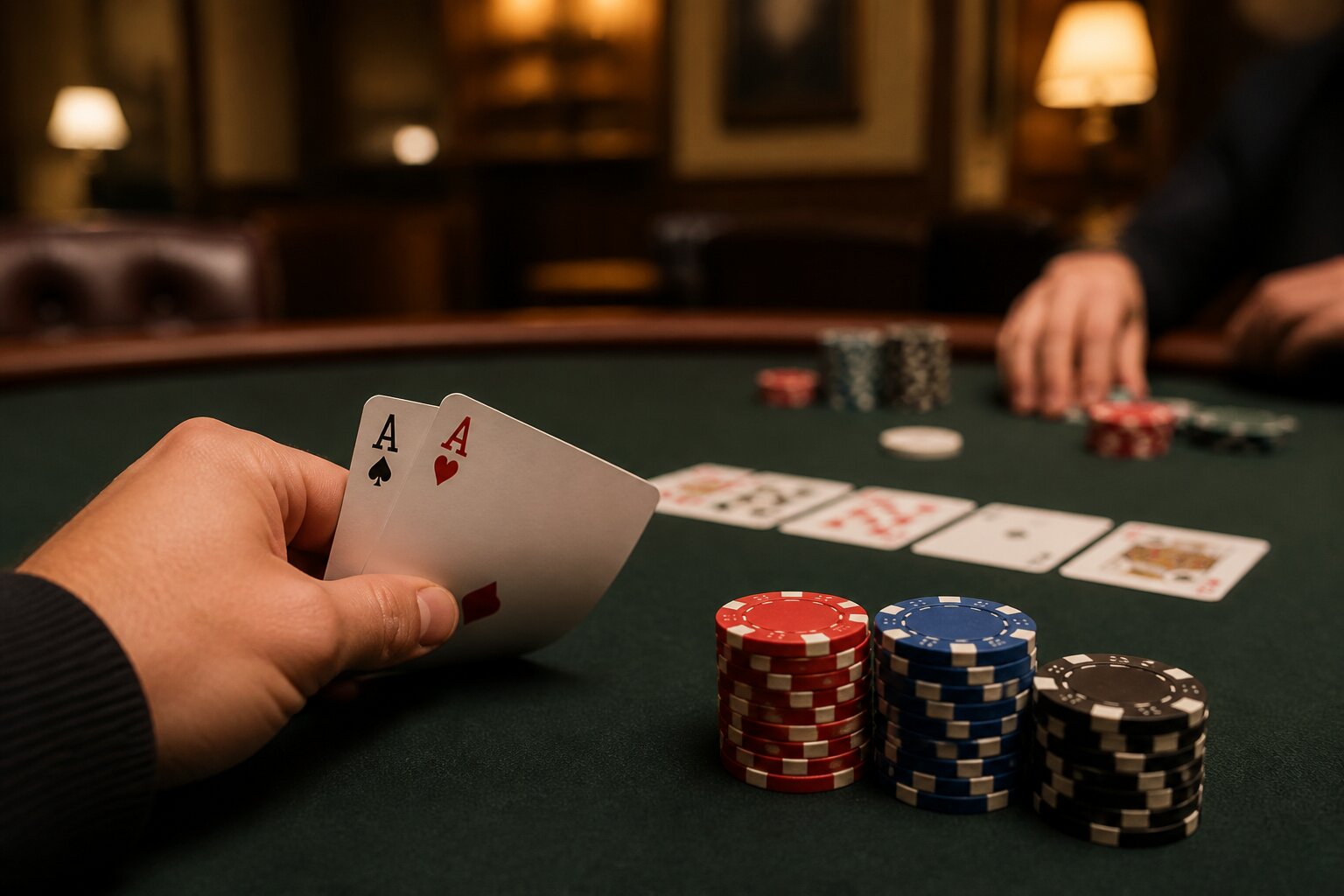
Ever wondered how some poker players always seem to know when to make a move or when to hold back? The secret often lies in understanding blockers and the power of the blocker bet.
Whether you are new to the game or sharpening your strategy, knowing what a blocker is can change how you read a hand. It provides a clearer view of what your opponents could realistically have and helps you choose more informed actions at the table.
Curious about how blockers work, what a blocker bet really means, and which cards count as blockers in poker hands? Read on to see how this subtle concept can sharpen your decision making.
What Are Blockers in Poker?
Blockers are single cards in your hand that reduce the number of combinations an opponent can hold. When you hold a particular card, it is not available to anyone else. In Texas Hold’em, where five community cards combine with each player’s two hole cards, that single missing card can change the probability of an opponent holding a specific strong hand.
For example, if you hold the ace of hearts on a board where a heart flush is possible, that ace cannot be part of another player’s flush. That fact narrows the set of hands an opponent might have and alters the way you interpret their bets.
Blockers are a small but useful piece of strategic information. They never guarantee an outcome, but they help refine your read on opponents and the likelihood of certain hands. The next section explains how that refinement affects actual hand evaluation and betting choices.
How Do Blockers Affect Poker Hands?
Blockers change the way you assess risk at the table by limiting which combinations remain in an opponent’s range. If a particular card would complete a very strong hand for someone else and you hold it, you can lower the probability they have that exact holding. This makes some bluffs more credible and some defensive calls less necessary.
Common scenarios involve straights and flushes. When the board shows four cards to a flush, holding one of that suit reduces the available cards that could give an opponent the nut flush. Similarly, if a straight uses a specific rank and you possess that rank, there are fewer straight combinations left for your rivals.
It helps to think of blockers as one element within a wider assessment. They interact with position, bet sizing, and observed tendencies to shape a decision. With that in mind, the next section looks at how blockers are deliberately used through the blocker bet.
Blocker Bets Explained
Blocker bets are a tactical use of the knowledge that you hold certain cards. They adjust the price opponents must pay to see a showdown and can discourage large raises in situations where the absolute nuts are less likely.
Many players use blocker bets on the river to protect medium-strength hands or to extract value without inviting big reraises. The goal is often to set a manageable price for the opponent rather than push for the maximum pot.
The following subsections unpack the concept further and show when this tactic can be most effective.
What Is a Blocker Bet?
A blocker bet is typically a smaller-than-normal wager placed with the awareness that your hole cards reduce the combinations of very strong hands for your opponent. By betting a controlled amount, you aim to reach a showdown cheaply or make it harder for others to raise for value.
This type of bet can also serve as a disguised value bet when you hold a hand that is good but vulnerable to a narrow set of stronger hands. The smaller size helps protect the pot while still extracting chips from worse holdings.
When Should You Use a Blocker Bet?
Blocker bets are most useful when you have a medium-strength hand and you hold one of the key cards that would complete the nuts for an opponent. They perform well against opponents who are likely to fold or call rather than raise without the strongest hands.
Use them selectively. Against very aggressive opponents who raise widely, a blocker bet may not achieve its aim. Conversely, against players who call down thinly, the bet can secure extra value while controlling the pot. Choosing when to employ a blocker bet depends on game context, opponent tendencies, and your overall table image.
Understanding how blocker bets fit into hand reading helps make them more reliable, which is explored next.
Blockers and Hand Reading: How Are They Connected?
Hand reading is about narrowing an opponent’s range and assigning reasonable probabilities to different holdings. Blockers directly reduce the number of combinations that include specific ranks or suits, so they are a practical input to that narrowing process.
When a particular card on the board completes a potential straight or flush, owning one of the needed cards means fewer opponents can hold that exact completion. That insight can make a call, fold, or small bet more attractive depending on the situation.
Hand reading also relies on betting patterns and player tendencies. Blockers should be folded into that wider picture rather than treated in isolation. The following section considers how these ideas play out differently online and at live tables.
Do Blockers Matter in Online and Live Poker?
Blockers matter in both formats, but the emphasis differs. Online, where visual tells are absent, players lean more on numerical inputs such as blockers and timing to form reads. This makes precision in using blockers more valuable in virtual games.
In live poker, players combine blockers with physical information such as posture, speech, and timing. Those additional cues can amplify or contradict what the numbers suggest, so live reads often blend qualitative observation with the quantitative effect of blockers.
In either setting, blockers are a tool to reduce uncertainty, not a way to remove it. The next section separates fact from fiction so you can apply blockers without falling for common misunderstandings.
Common Myths About Blockers in Poker
A frequent myth is that holding a blocker makes you safe from very strong hands. In truth, a blocker only reduces the number of possible combinations; it does not eliminate the chance completely. Another mistaken belief is that blockers guarantee the success of a bluff. While they can improve the plausibility of a bluff, opponents may still respond unpredictably for many reasons.
Some players think that relying heavily on blockers is sufficient to win. Effective play combines blockers with position, bet sizing, timing, and reads on individual opponents. Treating blockers as a single silver-bullet tactic leads to predictable strategy.
Clear thinking about what blockers actually change at the table makes them more useful. With that perspective, the closing section pulls together the practical lessons to apply at your next session.
Key Takeaways on Poker Blockers and Blocker Bets
Blockers are simple in concept but useful in practice: holding a specific card reduces the available combinations an opponent can have. That reduction helps when estimating ranges and deciding whether to bet, call, or fold.
A blocker bet uses this knowledge to control pot size and set a favourable price for showdown. It works best when tailored to the opponent and the situation, and when combined with other elements of good play such as position and observed tendencies.
No single idea guarantees success in poker. Blockers and blocker bets are practical tools to improve decision making while accepting inherent uncertainty. Play with discipline, keep your stakes within clear limits, and treat poker as entertainment. With a measured approach, understanding blockers adds a useful edge to your overall game.
**The information provided in this blog is intended for educational purposes and should not be construed as betting advice or a guarantee of success. Always gamble responsibly.