
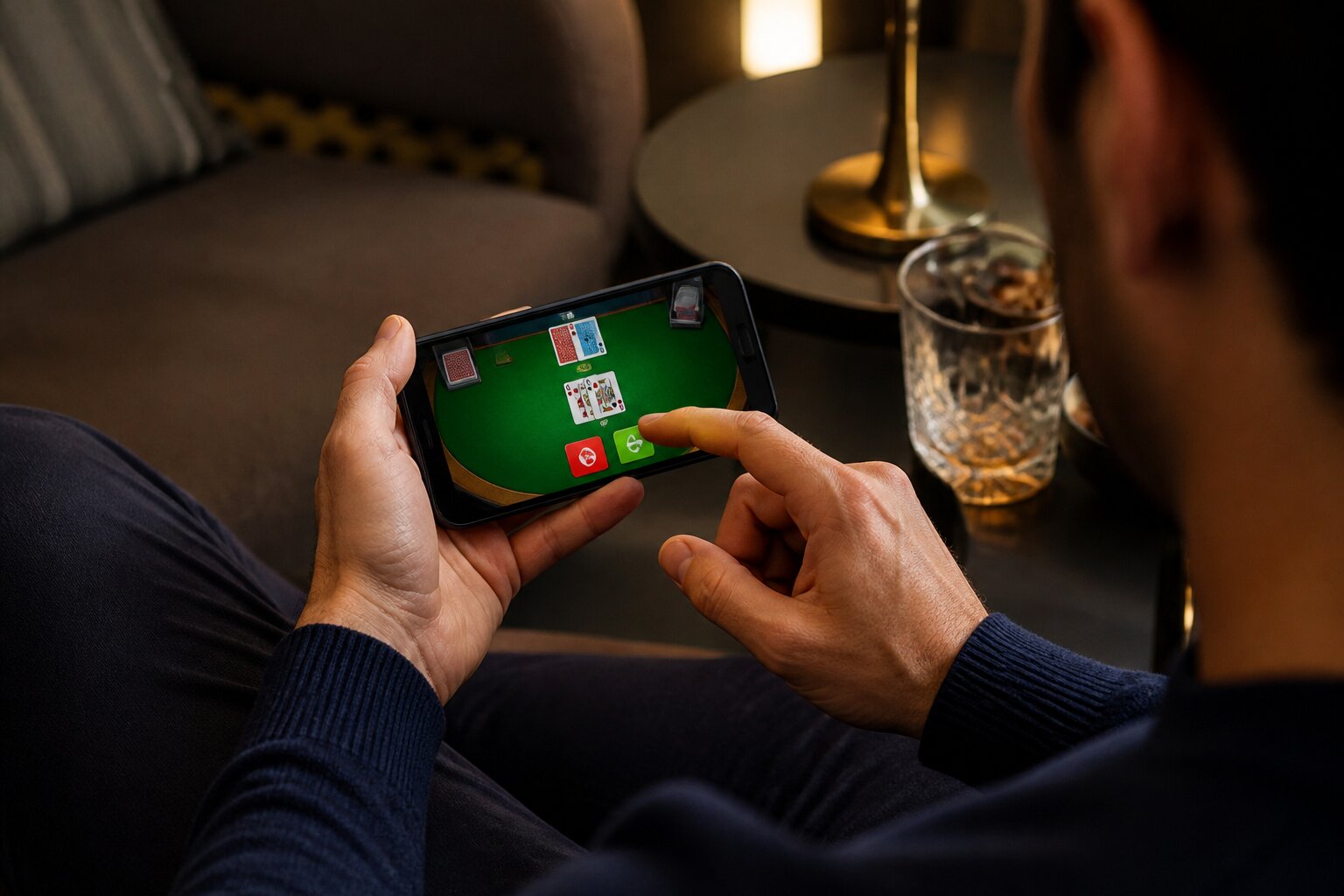
You’re perched on the sofa, phone in hand, and there’s a split-second decision to make, hit or stand? In mobile blackjack that fleeting moment can leave even seasoned players second-guessing what to do next. The dealer’s card shows a six, your hand totals twelve, and you pause, wondering whether to trust a quick move or take a moment to think.
Mobile casino apps make it easy to fit a quick hand into your day, but the faster pace can push you into choices you might not take at a table. Knowing when to hit or stand turns those split seconds into clearer decisions and helps you enjoy the game more. Before we look at the finer points of strategy, let’s get the basics in place so the rest of the article makes sense.
Understanding the Basics of Blackjack on Mobile
Mobile blackjack keeps the classic game intact while adapting every element for touchscreens. The aim remains to reach as close to 21 as possible without going bust, and to beat the dealer’s final total. Cards 2 to 10 count at face value, picture cards are worth 10, and aces can be 1 or 11 depending on which suits your hand best.
On apps, actions such as Hit, Stand, Double and sometimes Split are presented as clear buttons beneath your cards, and betting is usually adjusted with simple controls that make stakes obvious at a glance. Menus provide quick access to rules, paytables and settings, so you can check how a table plays without leaving the game. The move to mobile doesn’t change the underlying odds, it just presents information more accessibly; that clarity makes it easier to apply consistent decision-making, which we’ll cover next.
When Should You Hit or Stand?
Deciding to hit or stand is about weighing your current total against the dealer’s visible card, and choosing the option that gives the best statistical expectation. Low totals, middling hands, and strong hands each call for different approaches.
With totals of 8 or less, hitting is almost always sensible because the risk of busting is minimal and you want to build a competitive hand. Totals from 12 to 16 are the most delicate. For example, holding 12 against a dealer 6 usually favours standing, since the dealer is more likely to bust in that situation. Against a dealer 7 or higher, hitting becomes more attractive because the dealer has a better chance to reach a strong total.
Hands of 17 or more normally recommend standing, as the probability of busting on another card is high. Soft hands, where an ace can count as 11—such as ace-6, a so-called soft 17—offer more flexibility because drawing a high card will not necessarily bust you. Strategy charts summarise these rules into a simple reference, showing the statistically preferred action for each player total against each dealer upcard, and provide a reliable way to reduce guesswork without overcomplicating your play.
Factors That Affect Your Hit or Stand Decision
A correct decision depends on more than the two visible card totals. Whether your hand is soft or hard, the dealer’s upcard, the table rules and the number of decks all influence the maths behind hit or stand choices. Many apps make these factors visible in the game info, which helps you adapt without memorising every nuance.
Some apps offer brief strategy hints tied to your current hand, which can be a useful prompt while you learn. These are reminders, not substitutes for understanding, and they often point you toward the same basic charts professionals use.
How Do Table Rules Change Your Options?
Small rule differences can shift the value of particular actions. Payouts for blackjack, doubling rules, surrender availability and whether the dealer hits on soft 17 all change how aggressive or conservative you want to be. For instance, when blackjack pays 3:2 you gain more value from blackjacks than when it pays 6:5; that affects the relative worth of taking risks to reach a blackjack. If surrender is available, it gives a way to limit losses on very poor hands, which can alter whether you choose to draw or let the dealer play out.
Does the Number of Decks Influence Strategy?
The number of decks used—four, six or eight in many mobile games—alters the distribution of remaining cards and nudges percentages slightly. Fewer decks can increase the relative impact of each card seen and lead to modest adjustments in standing or hitting frequency. Most apps note the deck count in the game info, so you can decide whether to follow the standard chart or apply small variations for particular formats. See our piece on 2 deck vs 6 deck blackjack for more on how deck count matters.
These rule and deck factors are practical details you can confirm before a session, and they shape the best use of the next set of features apps put at your fingertips.
User Experience: Mobile Apps vs In-Person Play
Mobile play is built for speed, convenience and clarity. You tap buttons to act, check rules in a tap, and move on to the next hand at your own pace. Live tables feel different: social dynamics, the physical presence of chips and cards and the need to wait for others all change the rhythm of play. If you like having guidance at hand, mobile apps typically supply built-in reminders, pop-up rule explanations and sometimes visible strategy prompts.
Those conveniences make it easier to be deliberate about hit or stand decisions, since you can pause, consult the info and then act. Yet the same speed can tempt rapid choices, so a mindful approach helps. The next section looks at specific app features designed to support clearer decisions when you play.
Tips for Using Hit or Stand Features in Mobile Apps
App controls reduce friction and clarify options, but the smartest players still use the available tools deliberately. Large, clearly labelled buttons minimise mis-taps, and many apps include hand history so you can review prior decisions and see how different plays panned out. Pop-up hints or optional strategy overlays provide timely suggestions without forcing a choice, and sound or animation settings allow you to tune how distracting the interface is.
When you see a suggestion on-screen, treat it as guidance rooted in basic strategy rather than a command. Over time, reviewing hand histories and noticing how certain choices play out will sharpen intuition without abandoning the maths that underpins good decisions. With that in mind, the following section highlights common mistakes to watch for so you get more consistent outcomes from those features.
Avoiding Common Mistakes with Hit and Stand Choices
Rushing is the most frequent error on mobile. Tapping too fast or acting on a vague hunch leads to obvious slips, like standing on a weak total or hitting on a strong one. Use the app’s information panels and any built-in strategy hints to check the situation before confirming your move, and glance at the dealer’s upcard each time as part of that brief pause.
Another common trap is chasing losses, which often leads to riskier plays in an attempt to recover money quickly. Set clear deposit and time limits within the app and stick to them; these safeguards help keep play within comfortable bounds. Finally, avoid assuming past outcomes affect future rounds, since each hand is resolved independently. Staying disciplined about these points helps decisions remain consistent and makes the game more enjoyable overall, leaving you in a better position to use the app’s features effectively.
Play thoughtfully, use the available guidance and rules information, and you’ll find hit and stand choices feel less like guesses and more like deliberate, informed decisions that match the format of mobile blackjack.
Play Casino Games at Late Casino
We welcome you to enjoy the entertainment on offer with us at Late Casino, where you’ll find a friendly and welcoming environment. With everything in one place, you can enjoy the excitement of casino games at your own pace.
Getting set up with us is straightforward: just create your account, make a deposit and you can begin playing whenever you like. We look forward to seeing you enjoy your time with us.
**The information provided in this blog is intended for educational purposes and should not be construed as betting advice or a guarantee of success. Always gamble responsibly.