
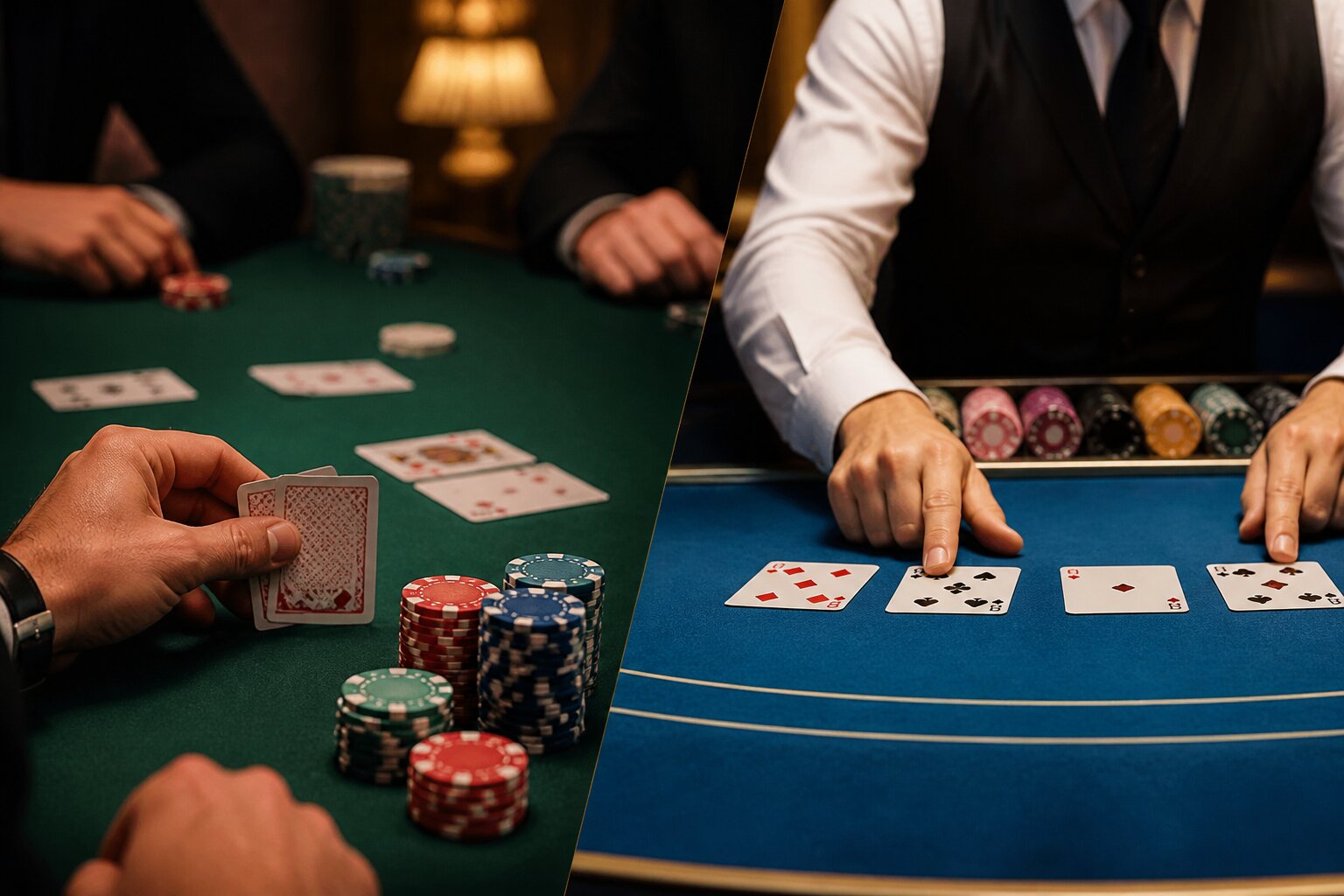
Picture yourself walking into a casino. On one side, a lively group gathers around a poker table, faces half-hidden, cards clutched tight, laughter and tension filling the air. Nearby, another crowd quietly watches the baccarat table as cards are revealed in tense anticipation, the outcome decided in an instant. Each game has its own loyal fans and a distinct atmosphere.
If you’ve ever wondered which of these classic favourites really delivers the most entertainment, you’re not alone. Is it the strategies and mind games of poker that keep you on the edge of your seat, or the quick, suspenseful rounds of baccarat that get your pulse racing? Both games have been played for centuries and each can shape an evening very differently.
Whether you fancy yourself a card sharp or simply enjoy the thrill of watching a table unfold, it’s natural to ask which game will keep you coming back for more. Read on to compare how they play, how social they feel, and what makes each one rewarding.
What Makes Poker Engaging?
Poker stands out because it rewards observation, timing, and adaptation. Every hand asks players to weigh what they see and what they infer about others, choosing whether to fold, call, or raise based on a mix of visible cards and perceived behaviour.
Bluffing is a hallmark of the game. With a weak hand, a confident bet can cause opponents to fold, turning psychology into a practical tool. That interplay creates a constantly shifting dynamic where the table’s mood and the players’ temperaments change the nature of each round.
Betting strategy is another layer. Some players take a cautious approach, waiting for clearly strong hands. Others use aggression to seize control and pressure rivals. These different styles create ongoing tactical battles that evolve as the session goes on, which is part of what keeps poker engaging beyond any single deal.
Tournaments amplify that feeling, offering a narrative across many rounds. Sit-and-go events, multi-table tournaments, and cash-game ladders each produce a different rhythm and social scene, from quiet concentration to loud, celebratory moments. The variety of formats means poker can suit a wide range of players and moods, and in the next section we’ll look at how a very different type of intensity appears at the baccarat table.
Why Do Players Enjoy Baccarat?
Baccarat’s appeal lies in its clarity and speed. The rules are simple, so players can join quickly without long explanations. You back one of three outcomes: the Player hand, the Banker hand, or a Tie bet, then watch the result unfold.
That brevity produces a particular kind of tension. Each round resolves almost immediately, and the reveal of the cards creates short, sharp moments of suspense. In live-dealer settings this is heightened by the ritual of dealing and the measured pace of the staff, which gives the game a formal, theatre-like quality.
The game’s low typical house margins on the Player and Banker bets make it attractive to those who favour sustained play. At the same time, the Tie bet offers a markedly different payout profile for players who prefer higher variance. These contrasts mean baccarat can suit players who like quick decisions and clear options rather than prolonged strategic contests.
Baccarat’s style and speed make it an elegant counterpoint to poker’s longer, more interactive rounds, and the next section compares how those differences affect pace and involvement.
Comparing Game Pace & Player Involvement
There’s a clear contrast in tempo and engagement between poker and baccarat, and those differences shape how entertaining each game feels for different people.
How Fast-Paced Are the Games?
Baccarat is brisk. Typical rounds often take under a minute, and it’s common to see dozens of hands played in an hour. The quick cycle from bet to resolution suits players who enjoy continuous action with few pauses.
Poker moves at a steadier pace. At a live table, 20 to 30 hands an hour is common as players pause to consider their options and interact. Online formats can speed this up considerably, but even then each hand tends to involve more decision-making time than a baccarat round. The tempo in poker is shaped by the table’s personalities and the chosen format, so a single session can swing between languid and frenetic.
Does Player Skill Influence the Experience?
Poker gives players substantial influence over outcomes through decisions and reading opponents. Tactical choices such as bet sizing, position play, and bluff timing change the course of a hand and the session as a whole. That sense of control and the opportunity to refine technique are major draws for those who enjoy a test of skill.
Baccarat offers no comparable strategic control once bets are placed; entertainment there comes from the immediacy of each result and the tension of frequent rounds. Outcomes are determined by the card dealings rather than player choices, so the focus is on the experience of the moment rather than an evolving contest of skill.
Play responsibly and keep sessions within limits you’re comfortable with. With that in mind, the following section explores how the social atmosphere of each game can add to the fun.
The Social Side: Interaction & Atmosphere
How sociable a game feels often depends on the setting, and both baccarat and poker can be solitary or communal depending on where and how they’re played.
Which Game Is More Sociable?
Poker naturally fosters interaction. The alternating actions, table talk, and the psychological elements of play create frequent opportunities for conversation and banter. In both live rooms and online lobbies, this social exchange forms a large part of the game’s appeal and can make sessions feel like shared experiences rather than isolated plays.
Baccarat tends to be quieter. Individual bets do not affect other players directly, so there is less tactical conversation. Yet shared anticipation—especially when many players watch the same live baccarat game—can generate a collective excitement that still feels social, if in a more restrained way.
Is Live Play More Entertaining than Online?
Live casino offerings bring tangible elements of a physical casino to screens, and that can heighten immersion for both games. Live poker tables add realism and interpersonal interaction that can mirror the feel of a bricks-and-mortar room. Live baccarat delivers the ritual and pacing of the casino floor, with card reveals and dealer presence that accentuate the game’s formal appeal.
Whether live or online, the social elements and presentation style influence which game feels more entertaining to each player. The next section looks at the range of formats available, so you can match what you enjoy with what is offered.
Variety & Accessibility
Both games present many variants and formats, offering choices for different tastes and bankrolls. Availability across mobile and desktop platforms means it’s straightforward to find the style that suits you.
Poker comes in multiple popular forms, including:
- Texas Hold’em
- Omaha
- Seven Card Stud
- Caribbean Stud
These appear in cash games, sit-and-go events, and large scheduled tournaments, catering to casual players and serious competitors alike. Online rooms and live tables make it possible to join at almost any hour.
Baccarat also offers several common forms, such as:
- Punto Banco
- Mini Baccarat
- Chemin de Fer
- Speed Baccarat
These variants change pace and betting options, but they remain easy to access and play. With differing buy-ins and speeds, both games have formats that suit cautious players and those seeking higher-stakes action. The following section examines how casino advantage figures into player choice.
House Edge & Player Appeal
The house advantage is a practical factor in choosing a game, expressed as the percentage the operator retains on average over time. It helps explain why different bets and formats feel more or less appealing.
In baccarat, the house margin varies by bet. The Banker wager often sits around 1.06%, the Player bet around 1.24%, and the Tie bet presents a markedly larger margin near 14%. Those differences influence the expected value of each bet and help explain why some options are favoured over others.
Poker’s economics work differently, because players compete against one another. The operator collects a rake or tournament fee instead of applying a built-in house edge on each pot. Typical rake rates range from around 2% to 5% depending on the format and stakes. This fee structure means skilled players can influence their long-term returns, while the operator profits via the fees regardless of which players win.
Both the mathematical features and the social or strategic elements determine what people find entertaining. For some, poker’s layers of decision and social play make sessions deeply absorbing; for others, baccarat’s clarity and tempo offer a concise, repeated thrill. Choose the game that matches the kind of engagement you enjoy and the time you want to spend, and keep play within limits you set for yourself.
Explore Casino Games at Late Casino
We welcome you to discover the broad selection of casino games waiting for you at Late Casino. Whether you enjoy exploring something new or prefer familiar favourites, our site is filled with options to suit every taste.
Getting started is straightforward: just create your account, make a deposit and you can begin enjoying the experience with us. We look forward to seeing you play with us soon.
**The information provided in this blog is intended for educational purposes and should not be construed as betting advice or a guarantee of success. Always gamble responsibly.